For our last week in Israel, we chose to reside in the funky Abraham Hostel where we feel at home with kindred spirits. We used the Hostel as a base for our intensive week of seminars at the Shalom Hartman Institute (SHI) along with 170 North American Community leaders, many who became our learning community partners. I felt like I was back in graduate school, but with Israeli issues and the future of Zionism as our curriculum as we engaged in multiple viewpoints and proposals.
Some days we attended plenaries, study groups and discussions from 9am-9 PM with Shabbat break and a day-long Tiyul (field trip) of our choosing. Ilene chose Jerusalem Sheik Jarrah controversy and I opted for an archeological hike to the Judean Hills at Tel Aksa where David fought Goliath.
The week-long program was non-advocacy, and we were afforded the chance to hear from some of the best thinkers who addressed the many issues and challenges facing Israel. Clearly, SHI is a Center Left orientation devoted to equality for Israeli Arabs and some form of Two States for a future resolution to the ongoing conflict.
My overall takeaway is that empathy, respect for different identities and living with security and dignity for all citizens and residents of Jerusalem and the West Bank was the proverbial North Star that our presenters were addressing.
Here are some of the Questions and Ideas from our conference:
Why Israel? What it is and what it can be?
Donniel Hartman: Israel as it is inspires. Building Israel as it Ought to be—being engaged in building it gives life meaning. Jewish history is about being a player and not just a spectator. What are the political possibilities and the ethics of living in society? State morality and individual morality are different. Sovereignty assumes the use of power.
Challenge: How Israel can be: it now is ethnocentric, reclaiming how Israel should be: Israeli identity alongside “Mamachleuit” a political notion of thick and inclusive statehood; compromise for the good of the whole. Israeli identity needs to evolve in how Israeli identity can include its non-Jewish citizens.
Open conversation with listening. If someone does not listen, defend yourself. If someone wants to see Israel gone then it is a closed conversation. If it is about the moral challenge of Jewish sovereignty, then we can discuss what can be done to improve rather than remove a Jewish State.
Tal Becker: Abraham Accords includes language of multi-religious inclusion. Rephrase from we own the land it belongs to us to we belong to the land along with others.
Masua Sagiv: Confederation as a solution means two states connected with separate governments.
BDS is not the path to peace but exacerbates the conflict; bottom up of sharing the land is the way; most extreme voices speak the loudest; recognize Jewish right to be here but respect the Nakba narrative to understand where the Palestinians are coming from.
Need a different model. Democratic and Jewish is not enough: Create alongside a stake of inclusive Israeli identity. “Mamachleuit”should be extended to Arabs for them to have an Israeli identity. In Israel Judaism surrounds them. It is in the public square.
Cornerstone of citizenship is shared fate. Our fate means we are stuck together; we must deal with it. Live together in the holy land by choice and acceptance for the common good.
Elana Stein-Hain: Judaism is practiced and meant to be in a place. It is not separate from the land of Israel. Zionism and Israel is an interpretive tradition and meant to be re-examined with questions and answers by each generation.
Mijal Bitten: “Ne’ emanut” is relationship with an ethical commitment. Expand moral vocabulary so relationship is a moral principle for living in society and bridging polarization. Israel is the home of my extended family.
Yossi Klein-Halevy: We are not the people who experienced the Shoah; we are the people that defeated the Shoah by creating the State of Israel and a vibrant North American Diaspora community. In 1945 Jews experienced existential shattering of what they had believed:
Physically: We are hated and in danger with no place to take us in
Psychologically: Do we belong in the world?
Assimilation: Can we ever be accepted?
Spiritually: The story the Jews told about themselves is no longer valid: “At Sinai we received the Torah. After Auschwitz many survivors returned it back to God”.
The Haredi (Ultra-Orthodox) response was that we do not want to be in your world. We reject modernity and the people who come with it.
Israel answers these dilemmas:
Create the infrastructure for the next center of Jewish vitality (the most creative Jewish center was Europe, which was gone)
Restore the belief that the Jewish people can find their place in the world.
We cannot live as separate. Renegotiate the Jewish presence in the world.
Assimilate with dignity and present ourselves as Jews who are part of the larger society.
Israel is a redemptive fantasy with mythic credibility. The issue is how do we use our power responsibly?
Donniel Hartman: Use of power brings us back to real life.
We cannot defeat all threats with hard power alone; our inability to keep our children safe show the limits of hard power. Power does not save the Jews, but it enables us to shape our own destiny. Abraham Accords is the victory of soft power.
Dyonna Ginsburg: What is our obligation as a nation state to foreign states? What does it mean to be a part of the family of nations?
On my Tiyul at Tel Aksya I visited the hills mentioned in the Bible and could see the walls and gates of those 10th century BC Jewish communities. As we approached the monument at Tel Aksa we saw about a hundred young Israeli men and women in uniform who receive an orientation at Tel Aksya as part of their basic training. I have become accustomed to seeing 18 and 19-year-old boys and girls with submachine guns everywhere in Israel. Seeing them here, connected to the monuments of the ancient lands had special poignancy. They look so young, yet continue the tradition of defense, vigilance, and shared fate Israelis have transmitted generation to generation. I walked down to the valley where David fought Goliath and imagined in the actual place where the Philistines and Israelites faced off. I also saw the Judean hills before me where the controversy over borders becomes a stark reality of geography and defense. Conflict permeates the daily life of Israel today as it did in the 10th century BC.
Tel Aksya Overlook where David fought Goliath (Judean Hills in the background)
Two encounters reflect the sweetness our Israeli experience over these months.
As we were about to leave SHI to catch a taxi to the airport Yossi Klein Halevi passes us in the front vestibule. After thanking him for his presentations, we reminisced on our Bronx and his Brooklyn origins. Yossi smiled and we began sharing recollections of the hallway cooking smells in our respective apartment buildings. Yossi began to rapture on the smell of cabbage, chicken, onions, and oil that we all grew up with. Here was one of the leading thinkers in Israel, who for a few moments, became like our extended family in recollection of distant childhood Jewish memories.
We arrive early at the airport and amble to a food court where we see a Sushi counter. After four months of hummus, falafel, and vegetables we agreed to indulge in Sushi, hoping it would be acceptable. It was as good as what we would have back home. We asked the young Israeli counterman what he recommends and in typical honest Israeli fashion he informed us he does not like fish and has never eaten the Sushi. However, we saw the Asian sushi chef who spoke perfect Hebrew. So, we called him over to ask about his recommendations. This began a twenty-minute conversation (he talked with us as if no one else was at the counter). As a fellow Septuagenarian, he related his life story of immigrating to Israel from Thailand as a chef at a large hotel. He lived by the beach in Tel Aviv and now works at this Sushi lounge because he loves what he does. He was very proud that his son had just served in the Israeli army. He feels at home in Israel. Towards the end of our conversation out comes a bottle of special Saki which he shares with us— a sure sign that you have befriended a Sushi chef.
As we leave to our gate, this last friend among the many we have made during these months, repeats several times, “Come back to Israel. We look forward to seeing you.” How poignant, yet totally fitting, that an Israeli Thai immigrant, who will live out his days in Israel, is the last voice we hear beckoning our return as we depart to go home.
Sushi Chef befriends us
Ilene’s reflections
I must admit that I joined the Hartman Institute class to support Jeff initially and not so much from my own initiative. I suppose you might say that my interest in Israel was more cultural than political. I was already missing opportunities to dance in Israel and not sure I was up for sitting hours in a classroom listening to speakers.
The theme of the conference was “Aspirational Zionism,” with the big question—“Why Israel?” If Israel is no longer needed as the only safe place for Jews (for now), or the connection to our land—the original Zionist ideas—has been fulfilled—then what is the new ideal? And since the conference was geared toward Jewish leadership from North American, the focus of this conference was also on the relationship between Israel and the Diaspora. Especially since the last war in Gaza, the relationship between Israel and the Diaspora Jews, especially in progressive Democratic American circles, has been steadily worsening. The question was: how to build bridges of understanding? How to acknowledge and directly address the difficult issues?
To my enormous relief, the opening talks were neither a pitch for money nor a defense of Israel, but a declaration of mission: the Hartman Institute was interested in the creative and difficult challenge of facing an increasingly diverse Israel and changing Middle East landscape. Donniel Hartman’s declared challenge was to help build a post 1967 state that was both Jewish and democratic.
I resonated to this framing in a very personal way. My first introduction to Israel was when I was 14 years old, and Israel was 14 years old. Coming from Great Neck, NY, where my parents had provided us with such material and psychological security that I had never experienced the antisemitism or the poverty they had experienced. I was shocked to find people my age who had a mission, who believed in something. In Israel, at Kfar Hayarok, young Israeli’s asked me “who was I?” If I replied “American,” they would say: “You are Jewish and should live in Israel.” It was confusing but intriguing…I joined Habonim, the Socialist Youth group, where we believed we were building the perfect democracy. I was only 14 and felt somewhat that this was too good to be true, and of course no one told us that there were already people living on the land and that there were conflicts….but I fell in love with the idealism. And folk dancing.
The question of Jewish identity was one of the big ones considered by the Hartman Institute in the wake of post-1967. Added to the confusion of the increasing divide between Jews in Israel and in the Diaspora was a set of new identities: colonialist, white imperialist, apartheid, secular Jew…who am I?
I welcomed the opportunity to hear many different narratives about this complex history. On the day of the “tiyul” (hike), I chose to hear the Palestinian and Jewish settler narratives of Sheikh Jarrah, the hotly disputed neighborhood in East Jerusalem where Palestinians have been claiming that Jews were trying to evict them from their long-time homes, and Jews are claiming that the Palestinians have been squatting in homes that are actually owned by Jews. We had lectures and an orientation first from an Israeli guide, then went to the neighborhood. Walking the neighborhood it was easy to see its strategic and symbolic importance to both sides; it contained tombs of both Jewish and Palestinian holy sites. For the Jews, the site contains the tomb of Simon the Just, a Great High Priest of the Second Temple Period and Sheikh Jarrah is the pathway to Mt. Scopus and the prestigious Hebrew University. Yet Sheikh Jarrah also linked the Palestine holy burial site with the Damascus Gate, the Temple Mount and Al Aksa Mosque.
We also heard about claims of inequality and “apartheid,” second class citizenship for the Palestinians. We were shown their national identity card that were the same as the Israeli citizenship cards but had one important change. They were not citizens of Israel but were “residents.” This meant that they could not vote in national elections but could vote in municipal elections. They can get citizenship if they apply, although it was said that the process is very long and difficult. On the one hand, the Palestinians claimed that they had only two voting booths in their area, whereas the Israelis had about six. On the other hand, the Israelis claimed that they didn’t vote or take responsibility for self-governance anyway, whereas the Palestinians claimed that this was another example of marginalizing them.
Then we heard from Chaim Silberstein, founder and president Keep Jerusalem. He addressed the legal argumentsn first, that the land was actually bought and legally owned by an Israeli company. The land was originally purchased by Jews in 1875 during which time a community formed around the tomb of Simon the Just. They were evicted in 1948, and Jordan put the land in trust for the Jewish owners. The Jordanians rented the homes to Arab families starting in 1956 with no rights of ownership, and Jewish investors bought the land from the original Jewish trusts in 1998. Accordingly, he said, the homes are still Jewish and the Arabs, by not paying rent, have forfeited their rights to the homes.
We also heard that it was a demographic issue. If they were citizens, then they would start outnumbering Jews and Israel might not be a Jewish state any longer. At present, 40% of Jerusalem residents are Palestinian, and 3% are citizens of Israel. While some Israeli Arabs are Israeli citizens, others are not, and the difference seems to be mostly strategic and symbolic.
He also reminded us of some relevant history to the story that is often omitted. For example, in 1948, just before the State of Israel was official, Palestinian Arabs massacred 78 Jewish doctors, nurses and others on their way via Sheikh Jarrah to Hadassah Hospital on Mt. Scopus. Also, the Palestinians in E. Jerusalem also voted for Hamas in the last election, an extremist group that vows to wipe Israel off the face of the earth. Given Arab violence in the past, the Israelis view Sheikh Jarrah also as a security issue.
Then we heard from Ahmed Muna, a young Palestinian man who said that he was not officially representing anyone but just telling his story. His father had founded a book shop in the area that was a local gathering place for Palestinian intellectuals and conversation. This man’s claim was that Israel was whitewashing and appropriating their culture. His example was about hummus, that he explained was eaten by Arabs for hundreds of years. But when Israel marketed it as Sabra, an Israeli brand that was sold to the world, he was it as an example of Israeli appropriation. Some in our group wondered why the Palestinians didn’t market their own hummus and show the kind of innovation notable in Israel. Ahmed claimed that the Palestinians did, in fact, have great writers and a culture the world should know more about. His passionate description about the loyalty to their Palestinian identity was a perspective that helps explain why many Palestinians refused the compensation package offered by the Israeli government.
After that, we walked to the home of Abed Elfatah, a Palestinian father of an employee of the Hartman Institute. He served us coffee and refreshments in the courtyard outside his house and told us his story. He was a slight, dignified man in his 70s who was born in the house. He said that it had belonged to his family for generations, and that the Jordanian government had promised his family rights to the house in exchange for their refugee status. What that means is that they gave Palestinian families financial compensation as refugees in exchange for the deed to the house, but the Jordanian government never actually gave them the deeds. However, from his point of view he didn’t need to pay rent because he, in fact, owned the house. He also claimed that maps didn’t show that the Israeli land was actually just where his house was, so that undermined their claims of ownership. He added that his people had been evicted from Hebron and Jaffa, and had nowhere else to go, whereas the Israelis who had been evicted from their land did have other options. The question over who had been evicted and who had left voluntarily in 1948 added to the equation, as well as the Jewish claim that the original Jewish settlers of Sheikh Jarrah were Sephardic and North African poor Jews who had been evicted from their homes in Arab countries. Were they asking for rights of return or compensation? Abed Elfatah was a shoemaker and had spent the last 50 years paying money into a court system that was still wrestling over the question of ownership rights. We could see that the question of who should live in the houses was both an extremely complex legal, political and psychological issue. And I left feeling sad for this lovely man and his—and other’s—predicament.
Abed Elfata
Finally, we met with Tal Yeshubayev, a Jewish resident of Sheikh Jarrah. She was a very young religious woman with two children. She had been born in a settlement on the West Bank but came to Sheikh Jarrah simply because it was affordable and had access to the Old City. She seemed quite naïve about potential danger in the area, and our guide was worried for her. We also understood that many young families that move to settlements do so simply because housing is now unaffordable in most cities in Israel, and families that live in the settlements receive significant benefits from the government.
Sheikh Jarrah
With brilliant talks covering moral philosophy, political history, feminist and multiple narratives, the Hartman Institute thankfully did not provide one answer to the problematic questions. Their faculty not only represented quite different religious and political perspectives but were also at the highest levels of government and policy. For example, Tal Becker helped negotiate the Abraham Accords. This means that faculty members were working for pluralism from potentially effective platforms in Israeli society. Other members were involved in implementing the Hartman’s central ideas of their new Aspirational Zionism by creating new organizations; for example, a boy’s high school where Arabic was taught, a seminary for all denominations that trained even what they called “secular rabbi’s,” an Arab-Israeli think tank. Their process in creating our curriculum was to meet often as a collaborative team, so that all perspectives could be covered. Their final mission was to be as inclusive as possible. I was relieved and heartened to hear their openness and desire for pluralism. Donniel Hartman’s closing speech was very moving, in his aim for a Jewish state that is also democratic and where its citizens feel heard and cared about.
Map of Jerusalem pre and post 1967
Photo Sheikh Jarrah
I came away with a few main ideas. One is that I was very heartened to hear of such bold and open initiatives at such a high level, and hopeful that they could indeed help create a post-1967 Jewish and democratic state. Another, more personal, is that I felt, as I often do, that Jews talk and think too much, and I missed emotions and the body. For instance, Donniel talked about moving from a victim/traumatized identity to coming to terms with our new identity as a people with (soft and hard) power. These were all ideas, and the Hartman Institute is creating new ideas. Yet we are also learning that trauma in in the body and the DNA, passed on through intergenerational trauma, and it is not so easy to erase trauma with some high-sounding ideas. I did ask him why he did not have psychologists and body people on his faculty since Israel unfortunately has some of the world’s best experts on trauma. He looked at me and said: “You have work to do.” I will follow up with emails to him and some of the other faculty proposing some trauma faculty.
More personally, I had been discouraged that my own agenda in coming to Israel; that is, reconnecting with some of the dance therapists and places where I had taught, had not come to fruition. I had proposed giving free workshops at U Haifa Creative Arts Therapy Department where I once taught, as well as the NATAL trauma center and others. I understood that these departments were still reeling from COVID and were somewhat chaotic, but nevertheless they didn’t even get back to me. I did give a workshop at the Ono program, once Lesley University where I taught for years, and was glad to learn that its approach was still so close to my own.
By the end of the trip, I was glad that Hartman turned out so well and was so engaging for me, but a bit sad that my own mission to re-discover roots of healing dance and reconnect with my community of dance therapists was not successful. However, the last week I accepted the invitation of my friend Hod Orkibi, head of the Creative Arts Therapy drama department at U Haifa, to join them for one day of a conference on research. A bit nervous about navigating two trains and taxis to get from Jerusalem to Haifa on my own, I did it and was so pleased to find there colleagues from around the world. I felt right at home, was welcomed as an elder in our family, and had a chance to meet Christopher Bailey. Chris came from Geneva as head of the Arts section of the World Health Organization that just put out a white paper on the effects of the arts on health. I am interviewing him for our upcoming panel at APA, found him to be a lovely person and very much in line with finding a growth perspective on measuring effectiveness for the arts (instead of the usual pathology model that seeks to reduce symptoms such as anxiety or pain). With the other creative arts therapists, I now have connected in other ways my past experiences teaching in Israel and abroad with new avenues through international channels. It is tremendously exciting for me that the arts are being recognized globally as important dimensions of mental and physical health, and that as a folk dancer with students abroad, I can enjoy ongoing future relationships.
Jeff, Ilene, Donniel Hartman
Photo Hartman
The same questions were true for me in re-discovering my Habonim friends who moved to Israel after college, as I did not. Some were on the left politically, very discouraged about what Israel “has become,” demoralized by Netanyahu and the increasingly religious extremists, and could not really answer the question about whether they would have made Aliyah at this time instead of 40 years ago. Others were still very pro-Israel and dedicated to strengthening the relationship between Israel and the Diaspora.
I came away with a renewed love for Israel. Although I cringe at the treatment I hear about the Palestinians, I can also appreciate the simple need for a Jewish state that protects its borders and its citizens and can understand that every issue is tremendously complicated. I can only hope, with new hope from the Hartman Institute, that there are enough people in the middle who, like in the United States, are trying to mitigate the radical extremists and find solutions that are at least moving in a direction of more democracy and equality for all its citizens. And I hope to get more involved with the future-thinking groups that I already am in the US and actually did not find in Israel—studying with Rabbi Diane Elliot and the Embodied Spirituality group and Julie Emden and Aliza Berk’s Embodied Jewish Wisdom group. I will do what I can to add dimensions of psychological trauma recovery and embodiment to the Hartman dialogue, as well as continuing to confront antisemitism where I find it in my own sphere of involvement—at this time the American Psychological Association. Inspired by the strong emphasis on family in the Middle East and in Israel, I will follow up with the cousins I rediscovered while in Israel and want to make sure that the younger generation does not lose the family connections. Finally,
I understand that although my home is rooted now in the United States, I also feel home in Israel..and that as a Jew I am undeniably bound to struggle with my peoplehood and its conflicts, challenges, and ideals.
Jerusalem June 2-19
Jeff’s reflections
We reside in Jerusalem as the last leg of our journey at my cousins Susan and Mark’s home in Ramot (a suburb) and the Abraham Hostel, including a three-day excursion to Jordan.
We are visiting people and sites and will conclude with a week-long intensive seminar at the Shalom Hartman Institute.
Three themes emerged for reflection: Existential threat and Holocaust; central role religious history and practice, and the evolution from fragility to strength.
We visited Yad Vashem the day before we left for our Jordan excursion. My last visit to the museum was in 1993. One walks through and experiences a zigzag of rooms with information, documentary films, and period objects re-enacting the transition of European Jewry from normalcy to unmitigated annihilation. We know the story, but in Israel it is blatant and resonant as so many are one or two generations descended from survivors.
In addition, there are the “missing million” from North African and Middle Eastern countries who had been expelled from their communities in countries like Iraq, Egypt, and Yemen after the establishment of Israel. Conversations with Israelis frequently involve where they came from, how and when their family got out, and the trauma they experienced. Concern and vigilance to existential threat has never been eased whether it came from Arab countries or currently Iran. On Yom Hashoa (Day of Holocaust Remembrance), when Israel stops for two minutes to a siren sound honoring the martyred millions, we were near Gaza in S’derot by the shelters where people flee when regular shelling begins from Iranian backed Hamas. The shadow of real threats lingers daily as news and discussion about Iran, Hezbollah, and Hamas persists.
However, Israeli humor reveals resiliency and the attitude to live every day as best we can: cynical, biting, and irreverent.
Israeli men owe Hamas gratitude since they proved Israeli women could get dressed and out of the house in under a minute. (During frequent shelling attacks in 2014 air raid sirens gave Israelis 15 seconds to get into their shelters).
A Holocaust survivor arrives in heaven where an angel meets him and says God would like to grant him one wish to compensate for his suffering. The man replies that he wants God to create an annual celebration party for the Holocaust. The angel comes back and says God is dismayed by such a request given the torment and death that occurred, how could he justify a party? The man replies, “I guess you would have had to have been there.” (Where was God during the Holocaust is a perennial Jewish question).
Ilene and I are now accustomed to being among Orthodox Jews whose dress, routines, and activities revolve around religious practice and ritual. Because we are residing with my cousins, we see how each day they tutor and interact with grandchildren and their preparations for generous family gatherings for the Shabbat. Sitting with family surrounded by adult parents and seven grandchildren who come every week, I can see how fulfilled Mark and Susan are to have this special, loving time so worth their great efforts. Israeli families are at home with getting together on the weekends. The whole country seems to prepare, and in whatever way they wish to, observe the Shabbat with loved ones.
I regularly visit the Old City and love walking through the crowded market alleys and at the sites that have great memories and meaning. Of course, in the Jewish Quarter the Western Wall, Cardo, rebuilt Huerva Synagogue, and the Ramparts Walk. Jordanian soldiers had guard posts on the Old City Walls to threaten Jews when the city was divided before 1967. Jews were not permitted to visit the old city and the Jewish quarter was methodically destroyed by the Jordanians with no protest from the UN, World Powers, or the Vatican.
One of my favorite sites is the Church of the Holy Sepulchre. A remarkable Christian site built by Emperor Constantine in the fourth century when Rome converted to Christianity. Ilene and I visited together; it was a great joy to see how awe inspiring and spiritual it is to wander through the many chambers and marvel at the history and effect this ancient locale has on the many Christians who visit as a pilgrimage and for a special religious experience. I love to return each time I am in Jerusalem, and while different from my own religion and practices, I am always moved and inspired.
Entrance to the Church of the Holy SepulchreChristian Pilgrims in line for lighting a candle and receiving a blessing
Our Israeli friends Shoshi and David escorted us on a tour of the Christian Quarter. We entered the Ethiopian Coptic section in the Church of the Holy Sepulchre and descended to Helen’s Cistern, a deep cavern that dates to the fourth century with a natural pool embedded into the rock beneath the Church. The narrow stone staircase brought us to the water, which was both eerie and awesome as we sang to hear our echoes in the deep. We also ascended above the Austrian Hospice for a 360 view of the Old City. Our hosts delighted us with stories and insights about Jerusalem and the history this city has played in their lives. They added so much to our loving memories of this special place.
Shoshi, David and Jeff walking the narrow passage to the cistern
I enjoy entering the Old City through the Damascus Gate, which is less frequented than the Jaffa Gate. My first visit to Israel was in 1970 on a summer trip during college. At that time the Jewish quarter was still destroyed; we would just roam through the Muslim, Christian, and Armenian Quarters filled with Arab men playing shesh besh, smoking hookahs, and visit stalls filled with sheepskin coats and rugs. Eating Arab Hummus and Pita was an exotic experience then. So those arches, alleys, aromas, crowds, and shopkeepers recall memories that astounded me then and enchant me now.
Rooftop view of the old city with our friends
One often overlooked tourist site is the First Station in the German Colony. The Ottomans built the first railroad that connected the Middle East at the end of the 19th century. My cousin Avraham and I visited and walked down the tracks viewing posters of the railroad history in Israel since then. Today, the Israeli rail service is world-class. Our trips to Turkey, Greece, and Jordan contrasts their paucity of public transportation infra-structure with Israel. The development and upgrade of the rail, bus, and transport services (although the Israeli roads and highways are traffic-jammed) parallels Israeli power, prestige, and gentrification.
First Train Station Delightful breakfast with cousin Avraham after walking the old railroad track
Ilene and I often take the buses and light rail tram that traverses Jaffa Road from the Arab neighborhoods up to Mount Herzl. We get to jostle and travel with Israelis and mix day-to day.
We were privileged to attend an Israeli wedding invited by our friends from Marin whose son was the groom marrying an Iranian Israeli bride. Both now live in Brooklyn. The woodland wedding site was on the Jerusalem periphery and the attendees were Israelis (from all origins) and American Jews. We witnessed a traditional Jewish wedding ceremony (they flew their NY Chabad Rabbi to conduct the service). The food, dancing, and sheer joy of the hosting families and guests made us feel so “Haimish” (at home in) and alive with hope, joy, and exuberance. We departed heightened and invigorated with love and radiance.
wedding couple
So, this is Jerusalem. One day in Yad Vashem, despairing the history of Jewish persecution and powerlessness, yet taking the state-of-the-art transportation light rail tram to Mount Herzl to get there. Another day celebrating a Jewish wedding, uplifted by young lovers marrying and committed to Jewish continuity and their hope and passion for Am Yisrael Chai (The Jewish People Lives).
Ilene’s reflections
Thanks again to Jeff’s wonderfully gracious and tolerant cousins Susan and Mark Guggenheim, we were able to rest and regroup once back in Jerusalem. We spent a very happy day touring the Old City and seeing sites for the first time. I have never been to the Church of the Holy Sepulcre, for example, and marveled at how large and comprehensive it was, even seeing the Ethiopian Coptic section. It felt to me like a very holy place, and I learned more about Christianity by following the Via Dolorosa. We spent a day with our friends Shoshi and David, sister and brother-in-law of our friend Alicia from Mill Valley. We always enjoy a great comraderie and loving friendship with them as it helps us all feel like we are with extended family.
The one event that stood out most for me was the wedding on June 16. Dove Govrin is a friend of mine from home and fellow dance therapist who lived in Israel for many years. Her husband, Zviki, is Israeli and so their son, Yoel, had his wedding in Israel at a beautiful organic resort farm just outside Israel. Yoel’s new wife’s family has Iranian and Yemenite backgrounds, so the wedding was a beautiful mix of plentiful exotic foods, music and modern American traditions.
Most significant for me was the fact that Dove and I had similar paths with cancer—she with breast cancer, and we have been involved with each other on healing journeys. Dove has created an art installation based on ceramics and art growing out of her experience. Her main figure of Miriam grew out of our regular dance sessions together on Zoom, which we did with Judy Berger, Maxine Cohen and other members of our Rosh Hodesh group. So, this wedding felt like a glorious celebration of Dove’s health, our health, and beautiful new life!
Dove
And very interesting to me was meeting and sitting with her long-time friends, Karen Cohen and Jill Damti. Karen is also a dance therapist who trained in Israel with some of the women I trained with in the US, giving us long shared his(her)story. Karen dances as part of a group of people with disabilities and they perform together. Jill is married to Amnon Damti, whose work I saw in the Dance Library archives. Amnon is Yemenite, deaf from birth, and apparently voted something like the best deaf dancer in the world. He and Jill created a company called “Two Worlds” and were invited by Obama to perform at the White House. Although I can’t get to Tel Aviv to see their performances at the Suzanne Dallel center tomorrow, I hope to stay in touch and learn more about their fascinating work.
Jill and Amnon Damti
One more day of regrouping chez Susan and Mark, and now we get ready for our last immersion in the Hartman Institute this week.
Jordan June 10-12
Ilene’s Reflections
The experience with Jordan was very mixed for us. I have been 5 times to work with the Syrian refugees in Amman with Steve Olweean and the International Humanistic Psychology Association. We helped train medical students and social work students from their university and medical school in Amman to run simple psychosocial support groups, and I trained a few women to incorporate movement and the arts into their sessions. We helped to set up a women’s center in Irbid, and I was looking forward to seeing my dear friend and colleague, Dr. Sara Al-Zurikat in Irbid.
https://vimeo.com/383417870/6adf6a9f8d
I really wanted to share with Jeff the warmth of my friendship with a number of Jordanians I worked with, and also the awesome experiences of standing where Moses stood on Mt. Nebo and walking through the ancient city of Petra.
On the other hand, I had already had several experiences where Palestinian colleagues in Jordan assured me that “there was no Israel, only Palestine.” It was yet again that confusing and inevitable mix of personal and political in the Middle East.
After learning about the recently very complicated situation at the border between Israel and Jordan, and a warning to stay away from Irbid from the US State Department (Irbid is close to the Syrian border) as well as a recent rise in COVID, however, Jeff and I decided to be safe and book a trip through our local hostel. The trip and group turned out to be great; the only problem is that we couldn’t get to Irbid. It was simply too far way up in the north to get there from the very south in Petra (near the Red Sea), and we were not confident about trying to get through the border by ourselves. In the long run we decided we’d have to miss Irbid and meeting Sara; hopefully Zoom will do.
Petra and Wadi Rum
The High Place was not like the Monastery. That was a façade in a mountainside; this was what Mohammed called the Killing Floor, or Math-bah. To make it the Nabataeans had carved away the very top of the rounded sandstone mountain. They left a raised bench round three sides of the large flat square and a single mattress of stone in the middle. To the west, a higher rock platform with a carved bowl, runnels and an altar was created by carving away a waist-deep, hip-wide corridor of living rock.
Married to a Bedouin, Margeurite van Geldersalsen
This is my fourth time to Petra, so enchanted was I by its ancient beauty and my desire to share it with loved ones.
But this time was different; we stayed 2 nights in a Bedouin camp instead of the previous one day trips. More magic..Bedouin and tourist playing music and singing at a campfire with lights twinkling on the mountain. Actually, our tents were well-equipped with real beds, fans, electricity, and intermittent internet access! However, watching the sunset over the multi-colored hills and experiencing the warm hospitality of our Bedouin hosts gave us more of a sense of life in the hills.
Photo of us and the Bedouin host
One of our Bedouin hosts
The lost city of Petra was the capital of the Nabataeans in the Shara Mountains more than 2,000 years ago. As part of the caravan trade of myrrh, frankincense and spices connecting Mesopotamia and Egypt, it prospered during the first centuries BC and AD. As a whole city, it featured elaborate facades carved into the multicolored sandstone, the most famous of which was the awe-inspiring Treasury (Al Khazna), used in the film Indiana Jones. The Treasury is almost 40 meters high and decorated with Corinthian capitals, friezes, and figures of gods and goddesses. It is still not certain what purposes it served, but it was most likely where the treasury of the king was kept.
Treasury
Petra was annexed by the Roman Empire until it was mostly destroyed by an earthquake in 363 AD. By the 7th century it was mostly abandoned and lost to most except the local Bedouins. As a mysterious legend, it was a challenge to Swiss Johannes Burckhardt who first explored in 1812. He dressed up as an Arab and persuaded his Bedouin guide to take him to the “lost city.”
The word Petra is also taken from the word meaning red, as the rocks and carvings are shades of red, rose, yellow and brown. Caves are carved into the rock in which Bedouins, who claim ancestry from the Nabataeans still live. The quote from the book “Married to a Bedouin” is one I bought and am still enjoying, one that describes the life of a Dutch-born young woman from New Zealand who married a Bedouin and lived with him in a cave. Many tombs are also carved into the rock and show inscriptions and architecture from Arabic, Greek and Roman influences. Their native religion seems to have integrated Greek and then Roman names for similar gods, and as well as later Byzantine influences. Since 1985, Petra has been considered a UNESCO World Heritage site and one of the new Seven Wonders of the World in 2007 (Note: Program notes thanks to the Visitor’s Guide to Petra brochure).
This time we were on a tour with others from the Abraham Hostel in Jerusalem, and the international and mixed ages of the group added to our fun. We were left to our own devices and not surprisingly Jeff and I exhausted ourselves keeping up with the young ones. We saw more than I have on other trips, climbed the Monastery with mules and I rode a camel back. Understanding that the path up to the Monastery was a steep 850 steps and the day was getting hotter and hotter, we took mules to the top with our new friends, Chen and Elizabeth. Although their saddles had stirrups so our feet were not totally dangling, the saddles were on blankets that kept slipping around as the mules swayed and stepped from rock to rock up the hill. Jeff admits to being afraid of slipping off to the cliffs below, and I kept trying new postures (the Bedouin ride sometimes with one leg crossed over the mule’s back) since my legs were getting tired. Nevertheless, we did make it to the top, to admire yet another sophisticated piece of engineering and beauty—the Monastery (Ad Deir). That was built during the reign of King Rabel II and later used as a Christian chapel.
Riding Mules to the Monastery
Another outstanding adventure was riding camels back to our starting point. Jeff decided to skip this one but I can’t resist an adventure, although I’ve ridden camels before. This was actually a longer ride than I’ve done before. I’m always charmed by these shaggy giant beasts, and jealous of how they can bend their long necks to scratch themselves with their teeth way down on their bodies….
On a windy hill at sunsetSunset over the Petra hillsRiding a camel
The ride was bumpy and always higher than I remember. The most fun was disembarking…the camel first came down on its forelegs so you lurched forward and almost fell over its head, then it lowered its back legs very suddenly so you lurched backward. Luckily, there was a high horn in the middle of the saddle that you could cling tightly to. Whew. I got off the camel.
Bedouin boy on donkey
After the second night at the campsite, we headed to Wadi Rum, the largest wadi (valley) of Jordan. Habitation of Wadi Rum goes back to prehistoric times and was where Lawrence of Arabia was filmed. This is what he writes (courtesy of Wikipedia): Lawrence described his entrance into the Valley of Rumm:
“The hills on the right grew taller and sharper, a fair counterpart of the other side which straightened itself to one massive rampart of redness. They drew together until only two miles divided them: and then, towering gradually till their parallel parapets must have been a thousand feet above us, ran forward in an avenue for miles. The crags were capped in nests of domes, less hotly red than the body of the hill; rather grey and shallow. They gave the finishing semblance of Byzantine architecture to this irresistible place: this processional way greater than imagination.”
We saw petroglyphs dating back to Thalmudic (ancient Arabian tribe) and now home to the Zalabieh tribe who run the tourist camps.
I’ve already written about the campsite and the stars at night, so all I’ll conclude with is a comment about our group. I was, as I quite often am, very pleasantly surprised by the comraderie in this group of about 20 complete strangers. There were couples, families, and single people of all ages. We managed to mostly take care of each and watch out for who was missing. It is quite fun being out in the world with other explorers who are also moved and excited by what we are experiencing, and helps to restore faith in human nature.
Abraham Hostel tour group
We came back to Jerusalem more tired and dehydrated than we understood, and slept for 2 days.
Jeff’s Reflections
We took a three-day excursion to Jordan organized by the Abraham Hostel tour service. It is not easy to travel between Israel and Jordan despite geographic adjacency. We were driven by Israelis to the border and then passed on to our Jordanian guide Ali and remained with him until dropped at the border to traverse back to Israel through border control. The hassle was well-worth the effort.
Our hosts were a Bedouin tent encampment (Seven Wonders) and we dined buffet style with excellent local produced and prepared food. So, between our air-conditioned bus, wonderful tent accommodations, and good food, we really lacked for nothing. The beauty of this trip was our immersion in Arab and Bedouin culture, Nabatean architecture, and Biblical historic sites. As with our Greek tour, the participants soon became a community, and Ilene and I bonded with a lovely young couple (he 33 and she 27) who are engaged and took this trip as a respite from their busy lives (he a cancer physician and she is management consultant). Being with them confirmed our predilection for intergenerational friendships and community. Their vibrancy and enthusiasm were like a tonic invigorating us through our journey.
We agreed to not judge our Jordanian hosts by their relationships with Israel, but even though Israel and Jordan have strong security and economic ties, there is no real cultural or people to people exchange. It was quite telling that the tour specifically restricted the trip to non-Israelis and barred anyone with an Israeli passport to avoid complications at the border crossings. It was also significant that when we visited Mount Nebo, where Moses is commemorated to view the Holy Land but not allowed to cross into the Jordan, the dedication is written in Arabic and English, but no Hebrew. Clearly, in Jordan acknowledgement of Israel is under the surface and the reference to Palestine is frequently voiced.
That aside, we felt marvelous being treated to Bedouin and Arab hospitality, warmth, and genuine sweetness. Our interactions were almost always with Jordanian men since this is a Patriarchal culture, and we can see how rapidly women age here. Jordan is a poor country and the vast desert areas we passed though were mostly bereft of cultivation; there was garbage and plastic strewn on the sides of roads traveled. More reason to appreciate the initiative and diligence of our Bedouin hosts who are creating tourist friendly oases where we can enjoy their country and they can benefit their own people.
The highlights of our trip were Petra and Wadi Ram. We walked through the Valley to the Treasury and then took donkeys up the 855 steps to the Monastery and then walked down (the heat was intense, the steps were uneven, and we were really exhausted). Each was a world class marvel of Nabatean ingenuity as these structures were carved in the stone rather than built to stand alone. Even their ancient roads were carved contrasting with the large stones used everywhere we visited in the Middle East by the Romans.
Wadi Ram was a remote location that was the locale setting chosen for the movie Lawrence of Arabia. We climbed a sand dune and saw a magnificent desert vista, climbed down and Ilene opted to ride a camel to our lunch location while I chose to travel on the desert sands in the back of a four-by-four jeep.
Perhaps the most romantic evening we have experienced together this journey was the last night at the Bedouin campsite. We were seated in a large circle, served small glasses of tea spiced and sweet, with a campfire and the stars above. Two Bedouin musicians were playing drums and an Oud, singing local Arabic songs to our delight. We were enchanted and energized. Happily, we relaxed in the cool desert night having seen the wonders of the world up close. Knowing we still have the capacity for adventure, exploration, and physical stamina to fully enjoy it with others. To our Jordanian hosts: Shoukra (Thank you in Arabic).
On top of a sand dune in Wadi RamOur guide Ali and our friends Chen and Elizabeth
Greece May 14-June 1
If Israel was like a wedding with covenantal commitment, rituals, and family engagement, then Greece was like our honeymoon. We intended this sojourn to be a break from our nine weeks in Israel (and one week in Turkey). We have never been happier; startling contrast between Ilene’s six months of cancer treatments and the breakout joy we have had in Greece.
We planned five days in Athens on our own and enrolled in an 11-day Roads Scholar trip that was educational and recreational. We ferry hopped to Mykonos, Paros, Santorini, and Crete, staying in hotels on the islands and traveling with a group of well-educated American seniors (half were from the SF Bay Area) like us to immerse ourselves in Greek culture, architecture, and archeology. We quickly bonded as a community of travelers in shared experiences and joyful engagement. I have included a link so you can see what we visited in the tour.
Several practices both in Israel and Greece have enhanced our enjoyment and benefit of archeological touring. Visit the actual site first to see the ruins in topographic context and then go to the museum to see what was extracted. Also, we hired private guides for Golan (Israel) and Mycenae (Greece) and group tours for Hebron, the Greek Isles, and Petra/Wadi Ram excursions. Knowledgeable guides bring both insight and personal experience, while taking care and transporting us to varied locations we would find difficult to navigate. We have the luxury of time so we plan days of leisure and rest to alternate with intensive touring, which can be exhausting.
We have become quite familiar with the Acropolis, Parthenon, and surrounding neighborhoods in Athens. Like in Jerusalem and Tel Aviv, our leisurely time to explore enabled us to feel at home in a tourist welcoming environment. We felt so much warmth and generosity from Greek people we have met that we both regretted the inevitable departure.
Sparing you the names of the many sites, museums, vistas, and beachfronts we have visited, I have several takeaways and reflections.
Ilene is vibrant red and relaxed in Crete
Hellenism (Greek influence) lasted thousands of years and spread through the ancient known world. We saw how their art, architecture, and perspective evolved and marveled at their collective genius. The question I had answered is why this people among all the others in the ancient world developed and influenced so many. The answer is that they have always been a seafaring people who traded and interacted with other societies. So, they learned, adapted, and taught by being open-minded and practical. Rather than impose their culture, they shared it. Alexander the Great spread Hellenism through his conquests, but the culture was incorporated into all the peoples who adapted to it, including among the Jews in ancient Israel and their Diaspora communities.
While the tourist havens are exceptionally delightful with great seascapes and views, the reality behind those locales is that the Greeks as a people have led hard-scrabble lives. The land is inhospitable to large farming (except in Crete which is verdant) and fishing and sailing has always been a dangerous mainstay. Small family style churches are ubiquitous because families and communities prayed for the safety of the men who ventured on the seas. Until quite recently Greece was a poor country and the many Aegean islands were isolated from the mainland. Striking contrast between the luxurious homes of the wealthy who buy property in advantageous locations and the population who live in dilapidated structures that need renovation and repair. However, there is considerable new building construction and renovation. Greece has invested in their tourist attractions and restoration of archeological sites and beach resorts. We tourists see the benefit in world-class museums, site maintenance, and Riviera quality seashores.
Like Israel, Greece is an ancient land that has seen its share of conflict and occupations. Both Greeks and Israelis can read the ancient inscriptions in the language of their ancestors and have an attachment to the land itself. For centuries each locale had allowed its historical heritage to be submerged in ruin. In the last 150 years archeologists have worked to uncover the sites and treasures. There is an ethno-national pride in both countries that their heritages have been restored, although there are multiple historical legacies (e.g., Ottoman). Greek tour guides have expressed resentment that so much of their archeological legacy has been extracted and appropriated by Colonists. So, if you see the Elgin Marbles in the British Museum recognize he took the best he could find in the Parthenon and left the Greeks with little of what was their own.
One big difference is that the Greek people are homogenous in ethnicity, language, and historic continuity (while identifying with a Greek Island). Israel is a polyglot of different people, many of whom recently arrived, and have very different cultures, religions, and may lack the cohesion we see in Greece. While the Athens Acropolis is now a cultural center open to the joy of all who visit, the Jerusalem Temple Mount and Old City is in continuous conflict. We are very aware that we return to a Jerusalem in which the celebration of Yom Yerushalem (celebrating the unity of the city under Israeli sovereignty since 1967) was rife with conflict and mutual disregard.
While Greece has its political and economic problems, we have felt safe, happy, and delighted in our Greek experiences. Two small details display the Greek character. Many of the ancient headstone sculptures show friends and family shaking hands with the departed in farewell to relationship. In modern times the Greeks whom we have met serving us as waiters, drivers, guides, and hotel keepers’ gesture with their right hands on their hearts to signify gratitude for our generosity and connection with them as individuals. That heartfelt persona is what I choose to remember of Greece as we now return to our beloved Israel.
Beneath the Acropolis and Parthenon
The Greek spirit in heartfelt thanksSeascapeGreek Sculpture Idealized Zeus from 400 BCThe headstones show the handshake by loved ones for the departed
Ilene’s Reflections
Greek Islands
This part of our trip was intended to be a vacation, knowing about the beauty of the islands, the value of the dollar against the Euro (and Greece already inexpensive), and the relaxed pace. We were both looking forward to it after a hectic week in Tel Aviv and city life.
Each island was so different, yet they blur in a mix of other impressions of getting on and off ferries, dragging luggage in and out of hotels…I’m left with great appreciation for sampling so many different cultures and topographies, yet thinking that “next time” it would be good to just relax on one island and slowly savor it.
Here are some impressions:
Paros, May 21
“What’s the use of all your books? Teach me to dance!!”
What is that special magic that is Greece? Imagine Alan Bates saying to Anthony Quinn—teach me to dance!
And so we did today. At our cooking lesson, where the group of us under loud and funny instructions by Maria and her team, whipped out tzakziki, Greek salad, filo dough and cheese pies, stuffed grape leaves, drinking lots of wine…and then Zorba the Greek playing…while I danced with the girl at the bar who showed me how to braid ribbons in my hair like she had…and then we danced with one of the cooks…
Leni rolling doughJeff stuffing grape leaves
And I felt like Judi Dench or Maggie Smith or Helen Mirren re-discovering her joy (and youth) in the Greek islands.
But this IS the Greek magic…the warm, jovial and hearty people, the open-heartedness, the seeming lack of war-like attitudes, the sun and the blue Aegean, the blue and white everywhere, the fresh food from the sea, the feeling of health and happiness…for me this is healing, coming back to life.
What is about the Greek experience that is so welcome now? I contrast the past 2 years in essentially one room, focused inward during the surgery process, and communication through only a flat 2-dimension screen. What Greece feels like to me is a re-embodiment…their focus on the beauty (not sin) of the human body, the celebration of wine and the senses, the earthiness of people we met….a perfect antidote to flat-screen virtual life.
Turkey also had a healing magic that was ancient, but somehow less Western, much more exotic and mysterious.
In the Greek islands we also began to learn about the unique culture of the Cyclades, an island chain that was formed by volcanic eruptions. We saw what were actually the tops of volcanoes that rose up from the sea many millions of years ago. We began to learn about the growth of Christianity, so important in that part of the world, beginning with the church of Panagia Ekatontapiliani, founded in the 4th century AD by Saint Helen, the mother of Constantine the Great. Our whole group loved the Venetian architecture of Paros, and it felt like a real island where people lived, and it was not dependent on the tourist trade. We all fantasized about renting rooms in the town and staying on..
Mykonos—almost too beautiful and a little glitzy by now. And yet of course when we heard our guide tell us how very recently it has been “discovered” as compared with the authentic ancientness of the islands, it helped restore its authenticity.
My main impression was aesthetic. Struck by the whiteness of graceful uniformity of the buildings, the details of red roofs vs. blue roofs, marble vs. cobblestone streets, blue doors and shutters vs. red or gray ones. Colors and smells and food and visions each turn in the narrow streets. Having dreamed about painting and plotting my escape, I ducked away from the group one afternoon. To my dismay it was raining, and I couldn’t sit outside. However, I found a little corner in Nick’s Taverna where I had lunch and ouzo and painted the lovely little church across the square.
Mykonos painting
I bought a turquoise Greek dress (I never wear blue) to compliment the beauty of the sea and sky…and began to feel the magic of the Cycladian islands.
Santorini—I had another little spiral of time here as I remembered the other time I was in Santorini. My parents had invited me to join them on a Mediterranean cruise at least 30 years ago, and our large cruise ship docked for the afternoon at Santorini. There too I ducked out from the group and brought my watercolors to a picturesque little street to paint the iconic blue-domed church. I in fact got so engrossed in painting that I missed the boat and they had to send out a little tender to fetch me. Here is the painting from that time:
Santorini, 2000
This time, with less time available to find the church, I found instead another lovely taverna on the cliffs with a view of the water and painted that view:
Santorini painting 2022
In Santorini we began to learn about the Minoan culture, visit ancient Venetian churches in the town of Pyrgos where I had a serendipitous encounter with this charming lute player.
Lute player
We ended our day in what our guide called the “hippie” town of Kamari, a quaint port town with pristine beaches and good prices. Of course, I remembered my own hippie days of sleeping on beaches off the coast of Italy, how innocent we were and how safe life was…and how lucky/fortunate we were to have those days of freedom. And how different the world is now.
Crete
I have always wanted to visit Crete and have been especially interested in Minoan culture since I read Riane Eisler’s The Chalice and the Blade, based on the work of feminist Maria Gimbutas. There she taught that Minoan culture was egalitarian with little violence. She said that a lot of what had been interpreted as symbols of war on excavated pottery; for example, olive branches that looked like weapons were actually symbols of everyday life and a playful, joyful culture.
Sure enough, in the palace of Knossos and the museum, our guide pretty much affirmed that view. The archeologists found evidence of a number of games played by the people, including the famous one of bull-jumping. In that risky game, young men and women did a double somersault over the back of a bull. Many were injured. But, unlike in Spain where the intention of bull-fighting was to kill the bull, in Minoan culture the bull was considered sacred and only the daring young people were at risk!
I was awed by the size and splendor of what was even left of the palace. Here is some of what we learned. First, Minoan culture was named after King Minos, and his palace was so large (over 1500 rooms and 22,000 square meters) that it was easy to get lost, hence the myth of Theseus with the minotaur and the labyrinth. He was apparently a wise king whom Homer called the “companion of mighty Zeus” and Thucydides said that he freed the seas of piracy.)
Fresco from King Minos palace
Crete is ancient, first inhabited during the Neolithic period from the 6th millennium BC. They had a simple culture as shown by their pottery and seemed to worship a female fertility goddess.
Fertility Goddesses
The second stage was the Bronze Age culture which Arthur Evans, who began the excavations about 1900, called the Minoan culture. This culture lasted over 1500 years, from 2600 to 1100BC. They used a script called “Linear B.” Their pottery, frescoes, precious metals, use of tools and architecture sophistication was outstanding. Their religion seems to have been a theocracy, with the ruler as the priest-king. Their main deity was the Mother Goddess, who comes in different forms. Her chthonic form is shown with snakes, the goddess of the heavens with birds and stars, and “Ministress of the Animals” with lions and chamois. A god of fertility was worshiped with her, portrayed as a bull, along with a young male and female who died and were reborn in the spring, symbolizing the cycles of nature.
King Minos throne room
After a series of very destructive earthquakes that destroyed the palaces and much of the life on Crete, and after the Dorian invasion in 1100 BC, the Minoan civilization was absorbed and disappeared.
Pottery
Mycenae
I was enchanted by the fact that so much of the Greek myths that I dimly remember from years ago were substantiated by real excavations only recently. So Jeff and I signed up for a day tour to Mycenae and Epidaurus with a one-day tour when we returned to Athens.
In Mycenae, we visited the palace of King Agamemnon. For those who need a refreshment of the story as did I, a synopsis is attached here:
Story of Mycenae
The palace was also huge, and we were able to walk inside King Agamemnon’s burial tomb. Many of the exquisite masks and artifacts were found in these burial tombs and are visible in the archeological musuems that we also visited. We found that it made sense to first feel the site and imagine life there, and then see the museum, otherwise we would be overwhelmed by the plethora of things to see in the museum.
King Minos mask
Epidaurus
Slightly educated about the ancient Greek medicine, I wanted to see Epidaurus, site of worship of Asklepion. It was also huge, occupying a large hill with varied facilities for bathing, for worship, for rituals, processions, and containment of infectious diseases. I was especially impressed by the theatre there that seated 12,000 spectators and was the site of many healing processionals. I feel nostalgic for a medicine I never knew but understood the importance of involving the family and whole community in rituals of healing.
The final blessing of our trip is that all of our 20-ish members tested negative for COVID upon our return. Not only does that confirm the healthiness of the trip, but I feel even more blessed….Jeff and I have dodged quite a few bullets so far.
Epidaurus
Back to Athens
For our last day, Jeff and I enjoyed a leisurely day before pick-up to the airport. I again fulfilled a dream of painting at the foot of the Acropolis while enjoying a meal at a bistro on the pedestrian street below. Here is that painting:
Acropolis
Back to Jerusalem
I must confess that I was reluctant to leave the Greek islands, feeling full of sun and good health. And when we were at the airport and reached Jerusalem, I felt a shock at the intensity of Israel and the brusqueness of people around us. Luckily, we landed at the home of Jeff’s cousins who live in a quiet suburb of Jerusalem and have time to write this blog and catch our breaths. They have been extremely hospitable to us as we enjoyed spending the holiday weekend and almost staying up all night on Shavuot for study.
As I re-read my charming book on Greek mythology, I was struck by some similarities between Greek and other religions: Origin story—in the Greek story the world is created with a God named Chaos who was lonely. There was nothing but a formless void and darkness…so he brought the Goddess Earth on whom the earth was founded. Wasn’t Adam lonely and needed Eve? Then Rhea, wife of Cronus, knew that Cronis was swallowing his children in order to escape his fate of being rule being challenged by his children. So Rhea hid one of the children, Zeus, in a cave on Crete where the nymphs placed him in a golden cradle and brought him up. Sounds a bit like Moses or Jesus…Zeus then released his brothers from the pit of his father’s stomach, and gave his brothers freedom, as Joseph (who was the one in the pit) rescued his brothers. Zeus also had protection from his magic goat pelt, like Joseph’s coat of many colors. Other parallels abound, all ways to help us try to understand our worlds and learn to be better human beings.
So ends our Greek adventure, with of course to be continued with another month still to go in Israel.
We returned to Tel Aviv to reside in a beachfront Airbnb to relax, and enjoy balmy weather, and beach activities. I am now familiar enough with Tel Aviv to feel comfortable traversing the city. We each met with Israeli friends and colleagues during the week, and I renewed relationships with long, leisurely conversations intensively conducted in Israeli style: immersive in both complexity and intimacy.
Walking along a waterfront is one of my favorite activities, whether it is Blackie’s Pasture back home or along Tel Aviv’s wide public beaches and walkways. You can see so many people who mix leisurely strolling or actively working out along miles of landscaped walkways just like Crissy Field in San Francisco, but with the Mediterranean Sea and Middle Eastern complexion.
We hooked up with Gina and Dan, who are the first Bay Area friends we have seen since we began our journey. They graciously invited us to join them on a private tour of the ANU (Diaspora) Museum and we had a fantastic guide who gave us an orientation and explanation of the exhibition highlights. The museum features each era of Jewish history imaginatively and engagingly.
We have already visited many sites and museums and can attest to the great enhancement knowledgeable guides and interesting interactive media and exhibit films are in Israel. Despite a COVID two-year hiatus in tourism, the touring experience has been enjoyable and educational. Well worth the effort and extra expense. In addition, the public transportation has been excellent; so, between buses, trains, and taxis we can get around, although our Israeli phones do not have internet coverage outside, so we sometimes have trouble getting a taxi or information. However, Israel is well set up for tourists.
Dan and I took a walk along the beach through Jaffa, which he knows much better than I do. So, we walked through some of the old city alleyways where only artists reside, and beautiful galleries and shops are tastefully ensconced in the ancient buildings. We also ambled through the Friday flea market where I spotted Israeli commemorative coins that brought me back in time to when I first visited Israel in 1970 and 1972-73. I also purchased a coin minted in a Ghetto in 1943 that was used by Jews who were destined for Holocaust “liquidation”. When I told the vendor that I am buying these coins to pass on to my family he gave me the traditional Jewish acknowledgment of three fingers to his lips with a kiss that signifies a mitzvah or “good deed”. We wished each other a good Shabbat and I had one of many fleeting moments of connection so common. Here one encounters the history of the Jewish people in so many ways.
So, our week culminated with a wonderful sunset walk on the beach and dinner in a Russian restaurant as a fitting conclusion to our first ten weeks in Israel and our departure for our next adventure in Greece.
View of Yafo from Tel Aviv beachfrontSunset walk on BeachfrontFirst Jewish Hostel established in 1740Ghetto 1943The Old Jews in Litzmannstadt Receipt 50 Marks
After a long flight and baffling COVID requirements, we finally arrived at Ben Gurion airport. Both Jeff and I had instant memories of other times landing there—me so impressed with the grandeur of marble and stone simplicity, big round spaces and modern/ancient feeling. I feel it again, definitely not Newark airport (our transfer point from the US).
We forgot about rain, arrived in a torrential downpour and had to navigate our way up 3 flights of steps with very heavy luggage. But the first miracle and Israelness happened in the morning. As we were wondering how in the world we would get down 3 flights of stairs and call a taxi, a young man was downstairs, helped us negotiate some help with the luggage, we met his beautiful young wife who was Russian/Ukrainian and also a psychologist….and he rented a car that fit all our bulky luggage and drove us to our next AirBnB. In exchange we will take them out for dinner—our first friends and angels in Israel.
We were absolutely charmed by our next Air B’n’B…in a renovated building near the Carmel market, very modern, near the bustling restaurants and food stalls. We found a savory Georgian restaurant for lunch, hungry at the sight of all the fish, herrings, phyllo crust savories and egg and cheese baked goods…and met the owner, Lela, a new friend who invited us to join them in dancing the next afternoon (kabbalat shabbat).
After a nap we wandered again around the neighborhood, marking new discoveries of alleyways, each with beckoning food stalls and lively young people. We have begun calling our friends, and already have invitations to shabbat dinner, Saturday with Ilene’s dear friend Rivka, Saturday evening with our tour guide, Yoni…and yet each day is unfolding with Jeff’s walk on the beach at Jaffa while Ilene catches up on sleep.
We returned to the Abraham Hostel as our base for a week in Jerusalem. Our stay was punctuated by dinner visits with Israelis and casual walks through the neighborhoods and the Old City as well as a visit to the Israel Museum.
Dead Sea Scroll Replica in Israel Museum
Our Hostel location is ideally situated adjacent to both Machana Yehuda Market and the Old City, so we can easily walk the most colorful and interesting neighborhoods, such as Nachlaot, and casually visit the sites.
Jerusalem has a religious intensity, archeological, and historical character that is both unique, yet familiar to both of us. We have each visited the Old City many times and still marvel at its concentrated diversity and allure.
It is now both cleaner and structurally upgraded to attract tourists who throng its narrow streets and enticing stalls. We continually return to the Jewish Quarter, which was destroyed during the Jordanian occupation from 1948-to 1967, when Jews were not permitted to visit their holy Western Wall. Yet today the Jewish Quarter sparkles with new structures, preservation of Roman antiquities, and the rebuilding of important Jewish sites such as the Hurva Synagogue.
We also frequented the Christian and Armenian Quarters and noticed how much upgrading and construction there is, complementing the Jewish Quarter renewal. We relish eating in Arab restaurants and enjoy the ambiance and friendly conversation. With the absence of tourists due to COVID, we can feel the hospitality and genuine relief from so many who rely on tourists and have struggled to maintain their livelihood during two years of COVID restrictions.
Many young Orthodox Jews (mostly men) enthusiastically mix with each other along with the multitudes who visit the Old City. The vibe is palpable, and we enjoy being spectators to the observant who engage in their piety and identity.
During our stay in Israel, there have been riots on the Temple Mount and a spate of terrorist killings throughout the country since March that have been a constant backdrop to our travels. While on the surface life appears normal, the tension and uneasy coexistence, particularly in Jerusalem, are constant. Yet, we feel safe and roam freely during all hours on the streets of Jerusalem and the Old City.
One of the many highlights of this week was our visit to the Israel Museum. Ilene enjoyed the art exhibits, while I took the archeological and Dead Sea Scrolls tours. The model of Jerusalem in the Temple era shows what existed before the Roman destruction in the 67-70 AD Revolt and how prominent the Second Temple was within the walled city that encompassed far more than the current Old City walls.
History permeates Jerusalem and we enjoy both the relics of old and the encounters with modern Jerusalem and its residents today. We plan to be back in Jerusalem for most of June to continue the experience.
Our host Shoshi for Israel Ind DayIlene lighting Shabbat candles hosted by U.S. Israelis Jerusalem 60 AD model Temple in CenterView from entrance to Western WallHurva Synagogue rebuiltIsrael Museum vantage point for the Jerusalem model
After a long flight and baffling COVID requirements, we finally arrived at Ben Gurion airport. Both Jeff and I had instant memories of other times landing there—me so impressed with the grandeur of marble and stone simplicity, big round spaces and modern/ancient feeling. I feel it again, definitely not Newark airport (our transfer point from the US).
We forgot about rain, arrived in a torrential downpour and had to navigate our way up 3 flights of steps with very heavy luggage. But the first miracle and Israelness happened in the morning. As we were wondering how in the world we would get down 3 flights of stairs and call a taxi, a young man was downstairs, helped us negotiate some help with the luggage, we met his beautiful young wife who was Russian/Ukrainian and also a psychologist….and he rented a car that fit all our bulky luggage and drove us to our next AirBnB. In exchange we will take them out for dinner—our first friends and angels in Israel.
We were absolutely charmed by our next Air B’n’B…in a renovated building near the Carmel market, very modern, near the bustling restaurants and food stalls. We found a savory Georgian restaurant for lunch, hungry at the sight of all the fish, herrings, phyllo crust savories and egg and cheese baked goods…and met the owner, Lela, a new friend who invited us to join them in dancing the next afternoon (kabbalat shabbat).
After a nap we wandered again around the neighborhood, marking new discoveries of alleyways, each with beckoning food stalls and lively young people. We have begun calling our friends, and already have invitations to shabbat dinner, Saturday with Ilene’s dear friend Rivka, Saturday evening with our tour guide, Yoni…and yet each day is unfolding with Jeff’s walk on the beach at Jaffa while Ilene catches up on sleep.
Tel Aviv/Haifa March 1-20 Jeff’s reflections
For the first leg of our journey, we were situated in the Tel Aviv/Haifa/Kfar Saba Coastal strip. We needed about two weeks for acclimation and sleep adjustment. Lodging in a great Airbnb rental, we became familiar with daily visits to the Carmel Souk and the Tel Aviv Beach area.
Being among the first tourists to visit Israel after the COVID travel ban, we found the streets and beaches mostly peopled by Israelis. We were impressed by the diversity of ethnicities, languages, and mixing of socio-economic groups. The street life is vibrant at all hours and Tel Aviv is as happening as New York. Impressive mixing of old and young, families and singles, Arabs and Jews. People are incredibly friendly, outgoing, helpful, and welcoming. We feel so much at home, relishing Israeli intensity and energy. Even brief interactions are memorable. We were going to return after one week in Haifa/Kfar Saba to our Airbnb. I asked the owner if we could leave our luggage in storage between stays. Instead of just agreeing, he replied, ”What am I going to say, no?”
Tel Aviv never interested me in past Israel visits. I was familiar with the distinctive Bauhaus architecture, partying port district, and high-tech centers. Like a Jewish LA with little charm or distinction.
No more. Tel Aviv is transforming into a beautiful urban center.
The historic renovations, including our Airbnb building and the prevalence of public art and great museums enthrall and delight. We spent three hours in the renovated ($100 million- and 10-year construction project) Diaspora Museum formerly Bet Hatefusut and now ANU (which translates “Us”) just staying on the third floor. We will return with friends who are coming from the US to tour the exhibits. The beachfront walkway is one of the most beautifully designed parks I know. Loving to walk in nature, I spent hours every day strolling along the Mediterranean to the ancient city of Yafo now incorporated into Tel Aviv. Ancient and modern merge.
Tel Aviv has great street food and informal dining with healthy, delicious, and copious choices. Fresh juice stands are everywhere, and we are never far from imbibing a Afuk (Cappucino) throughout the day. We have also dined in restaurants with creative and distinctive choices. I have not even tried to diet, yet already lost eight pounds during tour first month with good, healthy food and no desire to nosh between or after meals.
For two years prior to our trip, I attended weekly conversational Hebrew lessons through an online program from Hebrew University and several months of weekly group Hebrew conversation sessions called OFEK by the Israeli American Council. My Hebrew comprehension and rudimentary speech enhances my enjoyment and deepens human connection during our trip. Most Israelis speak English, but they spark appreciatively to any effort by Hebrew speaking foreigners.
We had four nights residence at University of Haifa. In 1972 I came to Israel to work and attend a six-month Hebrew Ulpan on Kibbutz Bet Oren on Mount Carmel. So, the Haifa region is both familiar and beloved, with great youthful memories. Because I serve on the SF/Haifa Sister Committee we were hosted by the University and a tour by the Mayor’s office. I loved being on campus, interacting with faculty and being among the students, many of whom are Arab-Israeli women. Haifa is the most pluralistic and integrated city in Israel. UoH reflects that diversity. We also visited community centers and toured the charming old Haifa district, having meetings with community center directors to get insider perspective on Israeli ethnic pluralism efforts with Arabs, Ethiopian Jews, and other groups. Ilene especially bonded with young women singers and dancers in an ethnically mixed performance group.
We stayed for a few nights with Ilene’s dear friend and colleague Rivka in Kfar Saba. Here is just one of many remarkable incidents. Rivka has a new male friend named Shalom, who is a 79 year-old Moroccan born Israeli. He picked us up at the bus station and drove us to his art-filled apartment in Netanya before we all went to Rivka’s. We bonded immediately. In Israeli fashion began a most intimate conversation. He freely talked about his love of Morocco and that he was a Mossad agent stationed there and then spent five years officially representing Israel as an economic consultant. He had an illustrious career as an economist. I casually mentioned that twenty years ago I had co-authored a book, “Creating Regional Wealth in the Innovation Economy” with a French/Israeli colleague Daniel Rouach. Shalom replied, “Ah, Daniel. I have known him for forty years.” We each recounted our Rouach stories. Then he calls Daniel’s wife Elisheva, whom I had not seen in 15 years, and hands me the phone for a friendly conversation. She suggests we visit them in Israel.
So frequently, both Ilene and I are one degree of separation with so many people we meet here. Each day something special and often unexpected happens.
Carmel Shuk
Haifa, Israel Ilene’s reflections
Today was scheduled to be a tour of Haifa on behalf of the Haifa/San Francisco sister city committee. I was happy to accompany Jeff but expected a rather boring set of speeches and photo ops of buildings and monuments.
Instead, it was nothing like that. We were first taken to a community center, one of the first from 1948. It was called the Beit HaGefen, Arab Jewish Cultural Center. Assaf Ron, the CEO, spent some hours with us showing us the cultural center and telling us of its history. Its aim was to promote “a shared society in Haifa and Israel by organizing intercultural and dialogue activities….in the assimilation of an intercultural outlook and leading social and communal processes in the spirit of democracy. The center’s main fields of activity are the art, education and tourism, providing tools for coping with complex issues in a multicultural society.”
Needless to say, I was fascinated by the central role of the arts in their educational outlook; in fact, they emphasized “holistic” learning by combining art, science and technology in project-based learning. I learned that they took years to build the kind of trust and friendship through collaborative projects and even time in nature that would allow young people to learn to first respect their own identities, then to respect others and differences. One point of emphasis was “shared space” or the in-between space where identities are mixed and shared. Here are some photos from our tour:
This is actually a replica of ancient tiles made entirely of spices…like Tibetan sand paintings that will dissolve over time and represent change and impermanence.
Working with the in-between space of the inevitable conflict among identities and learning to respect, but not resolve, differences.
Assaf Ron, CEO, me and Jeff in front of one of the buildings of the Beit HaGefen—Arab Jewish Cultural Center
Reputed to be the best falafel in Northern Israel—and it was soft and delicious!
Next, we went to another cultural center, the Neve Yosef Community Center, in a modest neighborhood of Haifa. We were met with Mr. Ifrach Shimon, the CEO, and other administrators who welcomed us and gave us a tour. Here they also worked to assimilate waves of immigrants and I was tremendously excited by the tour of young Israeli/Arab/Ethiopian people making music and art together. Here are some photos:
Here is a video clip of mixed groups playing music, singing compositions of Hebrew, Arabic and Amharic music. And me dancing with an Israeli Ethiopian Young Woman.
Beit haGafen
Ein Hod March 10, 2022–Ilene’s reflections
Today I had the opportunity visit Ein Hod with my friend and colleague, Marilyn Safir. Marilyn and I have been meeting regularly through Zoom for the APA Interdivisional Task Force on COVID for 2 years but have not met in person…and interesting experience now. Marilyn is the Founder and Past Director of Women’s Studies Program, the Academic Director: Post Graduate Program in Sex Therapy and the Director CBT VR Laboratory at the University of Haifa, so we shared a lot of history and colleagues about women’s studies in psychology—as well as interest in art.
She took me to Ein Hod, an artist colony near Haifa where I have wanted to visit. There, she met a friend of hers who lived there, and took us through some of the galleries and studios that were open. Due to intermittent rains and cool weather, the village was empty, and many shops were closed. On the other hand, that allowed us to leisurely stroll through the streets and chat with the artists. Here is Marilyn at the first gallery with photo histories of the picturesque village and artwork that I found particularly interesting. Mostly, I loved the streets where art was on all the walls, signs, and in the sculpture gardens.
Marilyn SafirEin HodEin Hod museum
Returning to Kibbutz Gonen and the Golan 3/20-25 Jeff’s reflections
We planned our journey as a series of personal visits and impromptu happenings with three formal programs to anchor our random activities: the Golan tour in March, the Greek Island tour in May, and the Shalom Hartman Summer Institute study in June.
We planned our trip with tour guide Yoni Shapira to show and talk about the famous battles for the Golan, visit significant archeological sites, see unique nature and aviary wonders of the region; and experience some of the special people who have devoted their lives to passions such as Shofar making, Olive pressing, and taking Chocolate to a whole new level of culinary delight.
We are now in Akko, the ancient city on the port where the Crusaders and Napoleon marched. Jeff and I walked through narrow stone streets of the old shuk and ate in a beautiful fish restaurant overlooking the Mediterranean.
Our Golan tour fulfilled so many of our hopes and expectations: to bring together my cousins to renew our family bonds; to revisit and reacquaint me with an Israeli region I lived in for a year that transformed my life in so many ways; to share with Ilene an indelible part of my life before and during the ’73 Yom Kippur War.
Th old expression, “Man plans, and God laughs” was proven true as I researched the best weather time of year for our Golan excursion, but we experienced the worst cold, rain, and nastiness on record since 1925 for the week of the tour. So inclement weather resulted in a water drenched hike on a nature trail, outdoor site visits in the rain, and everyone getting a 24- hour bug during the journey. Despite all the above, we had a fantastic experience.
Rather than recount the dozens of sites and locations, here are some of the reflections on the highlights of our experience:
We all absorbed the reality of the Israeli human costs over the past hundred years in the Golan and Galilee regions, including the ancient Jewish communities destroyed by the Romans 2000 years ago. The Syrian assaults had been continuous. The ’67 and ’73 wars were just episodes in a long series of continuous harassment and conflict. We saw the borders of Lebanon, Syria, and Jordan up close and understood how perilous the region was and still is.
My re-engagement with family, who I have rarely seen, but deeply care for, was renewed. We had a wonderful evening relating family histories beginning with our shared great grandfather Abraham who came with our grandfathers to the US. We recounted stories of each generation including our grandparents, parents, cousins in common, our children and grandchildren. Seven generations of transitions, tragedy, and emergent opportunity and freedom. One observation is that while our common heritage was Russian Jewish, each of our families have married and have progeny from North Africa, Yemen, and Lebanon that reflect the amalgam and geographic dispersion of the modern Jewish experience. We also heard the experience of the husbands of my cousins, who had Swiss/French and Syrian/Lebanese Jewish ancestry.
My hope in the visit to Kibbutz Gonen and the Hula Valley is that I could share with Ilene and family the experience and feelings I had during the Yom Kippur War as we visited the shelter I inhabited during that precarious period of Syrian invasion. I spoke by the shelter to the family (recorded on the video) as both a recounting of what I experienced and a statement of why I have been so connected and active with Israel for the past fifty years. We all lingered on the Kibbutz overlook of the beautiful Hula Valley. I lovingly recalled how special my Kibbutz experience was in this rural valley so spectacularly verdant. Kibbutz living defined my year-long experience in Israel as a 23-year-old. I was emotionally stirred reconnecting to the land and circumstance I embraced fifty years ago.
Most significantly, Ilene shared this indelible experience with me and viscerally could feel the connection to this place and my Israeli life. Sharing life together means so much as we will carry the Golan tour and the visit to Gonen with us forever.
View of Hula Valley from Kibbutz Gonen
March 29 Golan Ilene’s Reflections
Dear friends,
Again I apologize for abandoning you…so out of communication for weeks now…but we really haven’t had time to pause and reflect. Jeff and I have been living like college students, on and off buses, different towns every few days, being with people with not much quiet time for reflection or writing.
Here we are in Akko, the ancient town where we walked through Crusader tunnels and felt the history in the stones of so many centuries of violence, of waves of tribes invading other tribes. I’ve been reflecting on the ubiquity of human violence, wondering about its place in human nature. We discussed the sacrifice of Aaron’s two sons in this weekly Torah portion, and the role or necessity of sacrifice as a way of keeping tribal harmony.
I’m still excited about exploring rituals that can help people remember ways of grieving and moving through violence to more resilience. I have some meetings with other dance therapists and am also looking forward to research at the Dance Library when we are back in Tel Aviv.
In the meantime, this most recent part of the trip has been quite dramatic. Jeff and I headed up to the Golan for a trip that was very personal—to introduce his family to the kibbutz and bomb shelter in which Jeff spent the 1973 war.
I found this part of the trip both very powerful and also difficult. Not the least was the most extreme weather in about 75 years…freezing cold rain, sometimes sleet, snow in the mountain. And I brought sunscreen and a tank top for this part of our hike. Jeff and I quickly bought gloves, hats, scarves…
Partly because of the weather, the hikes were more difficult than planned. Parts were muddy or stone and slippery, rain was intermittent but constant. The clouds were dark, changing and dramatic.
More difficult for me the content of the hike. Our two very expert guides were both involved themselves in the military and some of the battles…and told us in detail about the important battles we revisited. We saw bunkers built by the Syrians, saw explicit films made about the soldiers who lost their lives in the Valley of Tears….one soldier describing how he was staring into the black hole of a Syrian cannon that was so close…and he had to decide whether to charge forward or retreat, and feeling, probably accurately, that the whole fate of Israel rested on his shoulders at that moment. And indeed it was the turning point of the war.
The need to control the boundaries and the strategic hilltops was obvious. We stood at practically the junction of Israel, Syria and Jordan…getting a feel for what living there was like.
And to see these battles going all the way back to the Romans, as Roman ruins are being uncovered everywhere. We heard about the spread of the Roman empire, and the Ottoman empire…and I think that this is human nature. And these fertile, strategically significant points of the Middle East will always be fought over.
And I think it makes no sense to ask who came there first….or whose land it belong to when it has been switching hands for thousands of years…
This immersion in the harsh realities of battles and land was followed by its opposite; an immersion in one of the world’s most holy cities: Tzvat (or Safed). This town was the site of numerous mystics and sages, producing prominent rabbis and academies. The town is filled with art as an expression of the sacred…artful gateways, murals, pots of flowers…narrow stone streets, steps and alleyways that flicker with gas lamps at night, producing a mysterious atmosphere. We stayed with friends from Berkeley who had made Aliyah and hosted us for a total shabbat home and shul experience. We joined their community in prayer and song, both very moved by the sincerity of expression in everyone we met. We saw people living their beliefs and creating their version of a sacred community.
I had the additional pleasure of studying and learning a bit with my friend and host, Yehudit Goldfarb. Yehudit is one of the founders and teachers of a movement process that uses the Hebrew letters somewhat like Tai Chi. She shared generously of her interpretation of some of the texts we were reading, as well as improvising a short movement on grief and recovery. Yehudit encouraged me to use my Hebrew name—Yehudit. My parents gave me the Yiddish version of Yehudis, but hadn’t used it. I do prefer the snap of the Hebrew name and may start to use it a bit..
In each place we were in Jeff and I made new friendships that we hope will continue for many years.
Life is good. We are constantly in awe of the intensity of life around us, pulsing with creativity and also history—the ever present darkness of death juxtaposed with a beautiful mixture of ethnic groups, foods, spices, colors….
And are so often saying: We wish so-and-so could be here with us now…so-and-so would love this….so I hope you enjoy this little note and know that in my heart I am sending frequent postcards.
Here are some photos to give you an idea of the journey:
Ilene and Jeff in the GolanSecond Lebanon WarFallen Soldiers Memorial
NATAL
Ilene’s Reflections
Dear friends,
Today I had 2 extraordinary experiences I want to share with you, and hope that you can experience some of them when you are in Tel Aviv.
The first involves my visit to NATAL, the Israel Trauma and Resiliency Center. I’ve been working with them for years, and they have a chapter in our book in which Charles wrote the Foreword (Integrated Care for the Traumatized).
They have been preoccupied with helping the Ukrainian refugees, and were about to tell me what they have been doing (I think I sent you a note from their administrator earlier about what they are doing)…except that almost no staff were available. Many are sick with COVID, as is their Executive Director, so couldn’t meet. But more urgently the rest were in rooms talking to the press about the latest terrorist attack, the 3rd in this past week. Everyone is of course anxious, and yet in Israeli fashion life goes on.
As we sat and had lunch together, in walked Mooli Lahad, who knows Charles well. He told us he had just come back from Turkey, where he was meeting with NATO, trying to help advise them about the trauma for the Ukrainians. I first met Mooli in 2006 when he gave a keynote at a conference sponsored by Lesley University in Netanya, where I was teaching. He invited me to visit his trauma center that is in nature, actually up in Rosh Pina, the north of Israel where we just left. However, trains being what they are in Israel I may be able to do that. I told him I would visit my student Fulya in Istanbul, that she started a training institute that might be of help…and of course he knows Fulya too. So the Middle East is small and we get connected when we come here.
NATALJudith Recanati
Next I went to the Eretz Museum to see their folklore exhibit of traditional dances. While that exhibit was closed due to construction, a new one was open that is amazing and I encourage you to see. It is a mix of art and psychology in a whole new way. I also took flyers for any of you who want to see it. It is called “Field Hospital” by Aya Ben Ron. She is a multidisciplinary artist, professor at Haifa University and Hadassah Academic College in Jerusalem. She works with site specific installations, documentary and film, and collaborates with medical institutions and hospitals. This show represented Israel at the 58th Venice Biennale in 2019.
In the site specific exhibit, you begin by “checking in” as a patient with the wristband familiar in all hospitals. I was already getting chills. You choose to focus on not medical ills, but social ills—and have choices among domestic violence/sexual abuse, transgender violence, abduction and kidnapping of minority immigrant children in Israel, and xenophobia. As a “patient” you are asked to wait in a waiting area like a hospital, then taken to watch videos, taken into a silent screen room where you are given instructions to screen, and hear narratives of people in these situations. It was both cathartic and illuminating, disturbing and brilliant. And art. And social action.
I took lots of video clips of Jude Recanati, one of the founders of NATAL, and photos of the museum installation. Here are a few…
Today was wonderfully warm and I look forward to time to share with you soon in beautiful Tel Aviv.
Many hugs,
Ilene
Field HospitalEntering Field Hospital as Patient/Participant
I reminded myself that the search was part of the process, and it would take time to find the right person to study with. I began with archives, having heard that there were dance archives at the Susanne Dallel Dance Center. I went there and, although it was a beautiful campus there were no archives there. I was told the archives were in the Eretz Museum. When I went to the Eretz Museum looking for their Folklore Building, I was told it was closed due to construction and renovation.
Tzvat, Akko, Rehovot March 25-April 5 Jeff’s reflections
After our travels in the Golan, we embarked to the ancient towns of Tzvat, Acre and then returned to Rehovot. Tzvat and Acre are great contra points to Rehovot. The ancient cities have been beautifully restored; one walks through living history on stone cobbled streets surrounding by and ancient walls and arches, resplendent with mural art and playfui, enjoyable images. Rehovot is the new Israel, home to the Weizmann Institute and one feels the intellectual and innovative energy and excitement like the university communities adjacent to UC Berkeley and Stanford.
Two reflections from this leg of the journey.
We stayed with the Goldfarbs in Tzvat and the Rosenfelds in Rehovot. Both couples made Aliyah to reside in Israel in the 1980’s; each lived and moved from Berkeley, and so have the Bay Area vibe, while being fully engaged in active lives here. They are also modern orthodox. So we had the experience of a complete 25-hour Shabbat in each home. We attended services in Chabad and Carlbach shuls in Tzvat with exuberant singing and dancing and community shuls in Rehovot with so many American/Anglo Olim (immigrants) who have lived lives like ours. The experience of Shabbat in Israel among the observant is of total community and visits to homes for meals and leisurely, very personal conversations. We felt so at home and inspired to do more of the same when we return to our beloved Kol Shofar community. While I do not know the whole service in Hebrew, I was familiar enough with the prayers and melodies and could read the commentaries to experience spiritual connection and deep reflection. In Israel, whether Jewish, Christian, or Moslem, the religious and spiritual life is palpable and publicly apparent wherever you go. The Abrahamic religions are indelibly embedded in life here.
Two experiences in Acre bestowed us a whole other perspective. When we disembarked the bus from Tzvat to Acre we assumed we would arrive at the Central bus station. But the bus left us at a non-descript bus stop. We had no idea how far it was to our Acre Airbnb. While I fumbled to try and schedule a taxi, Ilene flagged down a woman with a baby in the back to try and help us. The woman did not speak English, but Ilene was able to communicate that we were lost. She said her husband speaks English and he arrived by foot. The car was small, but he offered to take us and all our luggage to the Airbnb location. We had luggage on our laps, a baby in a car seat and the two of them crammed together. I inquired about the husband’s profession. He replied that he works in a medical device high tech firm. He resembled any high tech professional in Silicon Valley. When they dropped us off at our destination, I offered to pay or take them out to dinner. He graciously declined any offers and gave us his name and phone number to call him if we needed any other help. He just said,” We Israelis are a warm people.” From his name we understood that he and his family are Israeli Arabs.
We walked in the old town of Acre to the edge of the water where we found a charming restaurant outdoor veranda where we could have a sunset dinner adjacent to the Mediterranean. The large veranda had only one other couple among dozens of empty tables. Before long in comes about a hundred Israeli Arab girls on a field trip, arriving for a communal dinner. Three beautiful, vivacious young girls sit at our table, and we begin a conversation in English mixed with a bit of Hebrew. Two are twins. Ilene being a triplet immediately bonds with them and we feel like elder friends, intimately comparing family dynamics. We left so other girls could sit at the table and ambled back to our Airbnb through ancient alleys, reverberant with our experiences.
Identity is pronounced in Israel and the Arab Israelis we encounter seem well-integrated, but the tension is always under the surface. While we are here there has been a spate of terrorist killings that has put the whole country on alert. One of the murdered was Druze policeman Khoury, who gave his life to save fellow Jewish citizens. The more we see and hear, the more complex the story of identity becomes: Jewish Haredi and Secular, Israeli Jew and Arab, Jerusalem and West Bank Arabs and Jewish residents, and the constant threat of conflict with the surrounding countries who seek Israel’s destruction. Yet, the opening of relations with the Sunni Arab Emirates and other Muslim countries through the Abraham Accords has created a dynamic that is inexorable and dynamic. So many people we know here have already visited Dubai and the new bonds are real and exciting.
The conversations we have with so many different people have both informed and humbled us to doubt certainties.
Akko
Israeli Arab twins
Dance LibraryMarch 31 Ilene’s reflections
One of my missions to Israel was to research more about indigenous dance. My first experience with Israeli dance in 1962 blew me away—I’d never experienced the joy of Friday night kumsitz and dancing around the bonfire for hours. When I returned home and joined the youth group Habonim (a socialist youth group), I was asked to be the group choreographer. At age 14 I had the great privilege of taking the Long Island Railroad by myself into New York City and going up to the 92nd street “Y”. There I took classes with the great Fred Berk, a man who is said to have singlehandedly brought Israeli folk dance to the US through the Blue Star Camp in N. Carolina. Our group practiced and were able to be part of a group show in Carnegie Hall, one of the highlights of my teenage years. We wore flowing skirts and did dances about picking grapes from the field, all in the spirit of energizing a new democracy and working the land.
However, since that time Israel has greatly changed and has become much more diverse. Instead of the Ashkenazi culture in which I was raised (European), there are now many cultures in Israel, including North African and Ethiopian. I remembered that when I was teaching dance therapy at UCLA in the early 80s, a student had done her thesis on Ethiopian dance and reported that the Ethiopian traditions were being assimilated and lost. I wondered what I could find out about what remained—who was still doing those dances and what could I learn?
I reminded myself that the search was part of the process, and it would take time to find the right person to study with. I began with archives, having heard that there were dance archives at the Susanne Dallel Dance Center. I went there and, although it was a beautiful campus there were no archives there. I was told the archives were in the Eretz Museum. When I went to the Eretz Museum looking for their Folklore Building, I was told it was closed due to construction and renovation.
Then I found the archives, located in the basement of the Municipal Library of Tel Aviv. But that is another story, however leading me to the archives.
The second story started in 1971, when I started my masters training as a dance movement therapist at the City University of New York. We did our internship at Bronx State Hospital, a psychiatric hospital with many chronic residents. My supervisor at that time was Dr. Miriam (Mimi) Berger, who was one of the founders of the American Dance Therapy Association. I remember during one of the previous visits to Israel when she invited me to an opening for a plaque dedicated to her mother for Mimi’s donation to the dance library. When I told her about this current visit, she asked me to check on the plaque to see if it was still in its place.
So I got to the Municipal Library and spent a delightful few hours with the librarian there. Not only was Mimi’s plaque still prominently displayed, but they also had hours of videotapes of Ethiopian dance. I learned about Ruth Eshel, a faculty member of the University of Haifa, who first documented Ethiopian dance and formed a dance company with them. I was mesmerized by the beauty ad uniqueness of their dance, especially the shaking of what was called the “Shoulder Dance.” I also saw, in the dance company, Dege Feder, the young dancer I will meet tomorrow in Haifa. I am hoping she will work with me to produce some Tool Kits for my work on the Presidential Task Force on Culturally Informed Trauma and Grief Recovery that I was asked to co-chair by the president-elect of the American Psychological Association.
Finally, I was also invited to the library’s book launch of an Oxford University Press book on Jewishness in Dance. I was interviewed for one of the chapters about the relationship of Jewishness to dance movement therapy, but unfortunately could not make the launch since we were leaving that evening for the Golan trip.
Oxford Handbook
I realized, through this project, that what I took for granted as Jewish was what we called “lox and bagel New York Jewish,” and that so many people have very different traditions. I’m fascinated now with the Sephardic and Mizrachi traditions, seeing in them a haunting and to me an exotic beauty. I want to learn more.
Ethiopian Shoulder Dancing
Abraham Hostel and Masada/Ein Gedi March 30 Jeff’s reflections
In 1972, after completing my Master’s Degree at Denver University, I decided to take a break from career path. I purchased a one-way ticket to Israel to gift myself time for adventure, experience an outdoor communal life, learn Hebrew in an Ulpan, and to explore and cultivate my Jewish identity immersed in the Jewish nation.
During the subsequent 14 months on Kibbutzim Bet Oren and Gonen, I developed a sense for freedom, calculated risk-taking for my own happiness, and resourcefulness that in retrospect has helped to shape much of my life. Significantly, I befriended many people who like me were transient. I effortlessly developed strong bonds with other young seekers emblematic of our generation. Back packers who could take time in Europe, Israel, Asia and explore exotic locations, roles, and relationships before endeavoring careers.
Each time I have visited Israel over these fifty plus years, I yearned to find those free-feeling and adventurous communities of young-spirited people I encountered among volunteers in Kibbutzim. You cannot find them in the large hotels, tour buses, restaurants, and institutions that filter Israel for most tourists.
I have discovered the spirit in Abraham Hostels (AH) we have chosen for most of our time in Tel Aviv and Jerusalem. We each felt it as soon as we registered for our first night stay in Tel Aviv AH. “Abraham was the first back-packer” reflects the fun-loving home dedicated to providing community for transient travelers who want a supportive, fun, caring home away from home. It feels like a traveler’s kibbutz. In the dining room we help ourselves to breakfast buffet, sit on benches at long tables, wash our own dishes, and schmooze with fellow residents on the rooftop patio and gathering spaces. We reserved private rooms, while most residents room in shared dormitories. So, each level of affordability is graciously accommodated.
One of my goals was to re-enact the hike up the Masada Snake Trail that I last climbed in 1970. I have hiked many mountain trails with high elevation and ascent, but the Masada Snake Trail is particularly difficult. Totally sun exposed, with many vertical steps, the climb is equivalent to 86 flights of stairs. The day tour took us to Ein Gedi Springs (beautiful oasis near the Dead Sea) and then to Masada late morning when the sun was particularly strong, and the temperature was 80 degrees. I hiked with a new friend Wesley, a young fellow visitor from France. He took the role of my partner and protector as I struggled to climb the ascent. Many of the Israelis climbing down passing us encouraged me in Hebrew, recognizing that a 72 years old was either crazy or intrepid to endure such a challenge. With frequent stops to catch my breath and rest my fast-beating heart, I succeeded to get to the top with Wesley by my side. I joked that we had the same age numerical—27 and 72, just reversed.
Exhausted, but exhilarated, I explored the Masada hilltop with the ancient ruins overlooking the magnificent vista of the Jordan Valley, Dead Sea, and miles of open desert with the ancient Roman military encampments clearly visible below.
The day completed at the Dead Sea where I schmoozed and relaxed with fellow travelers from Portugal, UK, France, Germany, and US, many of whom were younger than my own grown sons.
I am under no illusion that I am still the young, eager traveler to experience all I can in anticipation that my life is yet to unfold ahead of me. However, on this day, in this way, I re-enacted that spirit in my hike up Masada and engaging with my fellow world travelers at the Abraham Hostel.
This four-month journey with Ilene we are discovering the sense of adventure, anticipation, and engagement in the moment that we each had in our youth. We are so grateful to share this together in wonder, curiosity, and to quote Ram Dass, “Be Here Now”.
Jeff hiked the Snake Trail up Masada
Family Geneology April 4, 2022–Ilene’s reflections
Last night I couldn’t sleep. I had started looking at Heritage.com, a geneology site recommended by our tour guide.
One unexpected takeaway for me from our visit so far in Israel has been a new understanding about the importance of lineage and family. Our guide proudly introduced himself as a 10th generation Jerusalemite. Most people here have photos and stories of their grandparents and grandparents. Streets are named after famous people, often military or political.
I admit that I used to have a reaction against putting names on buildings and benches of the donor families…didn’t the Torah tell us that the best gift was anonymous? Where are Jewish values of modesty (another reason I was drawn to Quaker and Buddhism).
But hearing stories of people being erased, stories disappearing, whole connections and communities gone…I begin to feel the importance of restoring each individual’s name. Of restoring lost connections, retracing the web of once vibrant communities.
I’m appalled at little interest I had growing up when I could have asked my relatives all those questions, and now most are gone. Cousins who could have been close are now lost, and we think of our family as small. How to recover these connections?
I was overwhelmed by Ancestry.com, knowing I’d be flooded with names of people I’d never look up…but Heritage is just a Jewish site and we’ll see. I was born with only one grandmother and never knew the other ones. I know a bit about my grandfather’s side since I was named after him (Isadore and Ilene), but nothing about my grandmother’s side, not even her maiden name.
So the search begins, and I feel yet another layer of connection and belonging coming.
Joseph and Chaika Schusterman, Ilene’s great grandparents from Kemenetz-Podolsky
April 21—excited to meet a cousin in Haifa whom I have not met before—Marc. He is, I think, a grandson of my great-uncle Carl Leventhal, whose family I don’t know much about except that Carl was born in what he called Palestine, ran away and joined the circus in Beirut when he was a teenager, stowed away on ships and was an artist, landed in Asbury Park, NJ…met my great-aunt Rae, they married, and he spent the rest of his life in New Jersey. I know a bit more about Aunt Rae’s side, eager to learn about his.
Passover in Rehovot Jeff’s reflections
Reflections on Passover in Israel April 15-17
We departed Tel Aviv to Rehovot to reside with Sherman and Melodie Rosenfeld, who have opened their home to us on several occasions. So, we had the privilege to be with them and their extended family for the first days of Passover. Passover in the US among the non-Orthodox is usually celebrated at home. We usually invite a few friends and family for an abbreviated Seder service with traditional foods to recount the Exodus from Egypt. In California there is little public presence or awareness that there is a Jewish holiday. Here in Israel, just the opposite.
In public space and homes, you cannot miss the ubiquitous awareness and collective celebration. Everyone is wishing Chag Sameach (Happy holiday). I went to a small grocery store near our hostel to purchase some sweets for our hosts. At 11 AM the store owners were passing out cups of wine for all the customers just to celebrate the coming of the holiday. Joyous spirit and community embrace.
The Rosenfelds’ home and community is Orthodox. So, we dwelt in Passover holistically with family, friends, community all-encompassing the prayers and rituals that we normally abridge or ignore. On Passover eve before the Seder, Sherman and I attended a home-based service in a neighbor’s backyard as the custom is to open the home for prayer, grounding us with community for the Seder.
The Seder itself was attended by two of their adult children, spouse/partner, and grandchildren: twelve attendees. Their daughter Adi is married to Moti, who is an Israeli Sephardic Jew, and he co-led the Seder with Sherman. We experienced both the Ashkenazi and Sephardic versions of the Seder and appreciated how Adi and Moti’sfive children were totally engaged and participated in the prayers and rituals. One example of an interesting difference is the Sephardim have a water-soaked matzoh that is soft, while we use a cracker like Matzoh. They recite the ten plagues to show the wrath of God on the Egyptians and we dip our fingers in wine and drop on our plates to show empathy with the suffering of the Egyptians. Same ritual, different interpretations.
The Seder concluded at about 1:30 AM after much discussion, children’s games and singing. We stayed through the weekend and met other Rosenfeld family adult children and grandchildren who came for lunch. We enjoyed the fullness of the family/community experiences as both spectators and participants in the tumult and conversations of a full holiday immersion. Engaging in conversation with their adult children, I felt a kinship.
The Rosenfelds have an American cultural sensibility. Sherman and Melodie are creative, passionate educators, with a California openness to exploration and curiosity, who chose to settle in Israel as young adults. They are engrossed with social justice, academic pursuits, and continuous learning and self-expression. Their children have all that but were reared and live an Israeli reality so different than my own California native sons. Each of their four adult children were raised with the same household values but chose different life paths. Just like mine have. I could not help but ponder the miracle of witnessing our children take flight to pursue their own lives, while we see in each of them the child they were when they were in our care.
One of the apparent differences between non-Orthodox American life and Israeli values is the priority we place on individuality and privacy, while their priority is family and community. Israel is a child-centered society. It is common for secular families to have three children and Orthodox families to have five or more. Because physical distances are relatively small, families tend to see each other more often and informally. Multi-generational connection is both frequent and continual.
While not wanting to replicate the Israeli and particularly Orthodox lifestyle, I do feel the comfort of it and wistful for what we miss. Passover or any Jewish holiday in Israel gives us the chance to see and be with people who have chosen a different path and way of being. Our travels give us a taste of what life can be and challenges us to reimagine our own practices, habits, and routines.
Sherman, Melodie Rosenfeld, Ilene and Jeff
April 15Pesach in Rehovot–Ilene’s Reflections
April 15
Jeff has already written about our experience during Pesach in Rehovot with our good friends Melodie and Sherman Rosenfeld, so I will just mention a few things. Melodie and I are just a year apart, and were both in Habonim during our teen years. We were even in the same youth Zionist leadership training program—she made Aliyah to Israel and I stayed in the States. The road not taken! It has been fascinating to compare lives, seeing how Israel has changed and how we have changed in these last 40 years. After being a student in Berkeley and other myriad endeavors, she made aliyah and has been working many years as a lecturer in a college of education in Israel and involved in her local shule. She now has 4 children, one of whom married into a Sephardic family and has her own 5 children. I, on the other hand, got involved in the 60s in the rebellious life of a University of Michigan student, went to Paris in 1968, read and met Simone de Beauvoir and agreed that marriage was not a good idea, especially for women. I followed Buddhism, and sought silence, open space and peace. I found Israel to be as I remember it—extremely intense, people-oriented. I did not have children and experienced the loneliness and fulfillment of an existentially free, individualist American life. I don’t look upon these choices with either regret or congratulations, but instead see the benefits of both and continue to look for balance in my own life in whatever paths are open and realistic for me at that time.
Turkey April 6-13
April 6, Istanbul Ilene’s Reflections
After a trying day of long lines at airports and multiple PCR tests, we finally arrived at Elyan’s mother’s house. Elyan was my student at Lesley University in Netanya, and we became close. She invited me to teach at her institute in Istanbul called Safir. I went for several years, also bringing in Marcia Leventhal to help me structure a two-year training program. During that time I grew to love Istanbul, Turkish culture, and especially the group of creative, intuitive, passionate women in our group. I loved the liminal spaces of Turkey, the blend of East and West, the layers of history and civilizations, and the graceful language. Elyan comes from an old and prominent Jewish family from Aleppo, they spoke French in the house, and she speaks Turkish, Hebrew, English, French and maybe Arabic. She is also a teacher of Kabbalah and a Gestalt therapist.
So this year we started out with a reunion of 5 advanced students. We were so happy to see each other and it was as if no time had passed. All had experienced struggles during COVID including lack of travel, financial and political, and we basked in the warmth of the support and understanding. We created an improvisation for the Tool Kits about grief and trauma recovery, noticing how easy it was to build on the trust and safety we’d established to go deep into the movement and rediscover life. As we watched the video after, we noticed that, even with eyes closed, group members were echoing each other in rhythm and shape, including even Seda’s one year old son. Each member then had a chance to record her reflections on video.
What was most exciting for me was the way in which the work is growing. Fulya is now a PhD student in Expressive Therapies at the European Graduate School, started by some of the same people who started the program at Lesley University and sharing a similar philosophy. Fulya and I are collaborating on training programs and I am working with her on her PhD dissertation about women and empowerment. Chronologically she could be my daughter, but we feel like friends and colleagues—the legacy continues.
We then spent the weekend traveling to Cappadocia with our husbands. I had been to Cappadocia in 1973 before it had hotels or modern conveniences. I wanted to share the awesome memory of fairy chimney rock formations, Christian mystics living in caves in the 7th century to avoid the Arab invaders, and thousands of people living in underground cities. Our hotel this time was built into a cave with artistically preserved authentic features. This is the view from our window (Photo). We discovered many commonalities between Jerry and Jeff, and traveling as couples was an additional pleasure. One morning we got up early to take the hot air balloon over the valley as the sun rose—an awesome and unforgettable experience (Photo). Another highlight was visiting a kilim shop where we spent a lovely afternoon with the artist, who shared his experience as one of the few left who knew the ancient art of embroidering patterns on woven backgrounds. We bought a small kilim for our home office and so appreciate its authenticity (photo). One more highlight was having coffee in the small town on the Asian side of the Bosphorus with Elcan and Duygu where they lived and where she grew up. It is charming, with a very different feel than the Western side. We were joined by another student from the group, Emine, who promised to read our coffee fortunes. Although she was a sophisticated advertising consultant in Istanbul, her mother and grandmother were shamans in a small village where she was born. They not only read fortunes but were also midwives and healers. Elcan, a high tech consultant and confirmed scientist, assured us that most Turkish people were shamans “under the
surface,” mysticism did not conflict with science, and the fortune reading was accurate. Emine
gave Jeff and me both very positive readings, yet they were very different and both uncannily accurate. Due to a blog of coffee grinds that landed cleanly on the plate, she was able to predict that my difficulties were now behind me and the future would be clear…whew!!
Emine, Duygu, Ilene and Jeff
Turkey–Jeff’s Reflections
Our sojourn in Turkey was a break from the known and familiar in Israel, at least for me. Ilene has a long history of both travel and work in Turkey, so for her it was a chance to reconnect with colleagues and show me what she loved about this country. While I have seen the major tourist sites in Istanbul on our previous visit in 2015, I had not been engaged with kindred spirited people nor explored Turkey beauty and splendor.
One of the joys of travel is to go from the known to the unknown and to connect with simpatico people. While we were on the go and saw so many sites, the individuals and the experiences will be what I will cherish.
Ilene was engaged with her colleagues for much of our stay, so I had the chance to be with Turkish guys for long walks and conversations. Bonding with guys who are business professionals and who have lived interesting lives is one of my favorite pastimes. Seeing and hearing about Turkey from their perspectives engrossed and fascinated me.
We were hosted by Ilene’s long-time colleague Elyan, a Turkish Jew whom she had met in Israel decades ago. Elyan was our Istanbul mom who accommodated us in her apartment where her recently deceased mother lived. Having a home base with hospitable and generous hosts has been a blessing and joy for us both here and in Israel. While privacy and independent living is a traveler’s prerogative, home hospitality provided with loving kindness puts the heart and soul into the happening. We have so benefited from generous, engaging hosts both in Israel and here.
(Erjan) John is an international tech consultant who we had hosted with his lady friend Dugye when they visited Marin. So, John took me under his wing, and we walked the Istanbul waterfront neighborhoods, and lunched in Turkish style with Raki and lots of small plates local delicacies. He also guided us for a day on the Bosporus, with visits to the Spice market and local attractions. We befriended and shared so many life stories. He freely voiced his frustrations with Turkish political and societal issues, while proud and anchored in his Turkish people and history.
The highlight of our Turkish experience was the three-day journey (we flew roundtrip from Istanbul) to the Anatolian region of Cappadocia. Our hosts were Ilene’s colleague Fulya, and her Jewish-American expat husband Jerry. Our three days together were enchanting, engaging, and delightful as we explored the region and by car and took the adventure of hot air balloon rides (we rose 2400 feet) over the magnificent mountain formations and valleys. Ilene and I were both thrilled and amazed; it felt like an hour-long levitation as we smoothly floated in mid-air with no lurching. We felt so whole and alive, breathing the dream.
Our time with our host couple really made the trip so special. Jerry and I discovered we had almost parallel lives, having married French women, raising two children to adulthood, and finding our soulmates in later life-stage. We each told our repertoire of jokes and there may have only been about five out of thirty that the other person had not already heard. Our long time together as couples with 16-hour chock-full days of activities made us feel like long-time friends and extended family.
Words cannot do the Cappadocia region justice. It is off the beaten path for the world’s most frequently visited sites. Yet is a global magnet for international and local visitors, who want to live among the ruins of ancient civilization, and still have the amenities and comforts of jet-set destinations. Because we were with Turkish speaking hosts, who took care of all preparations and inquiries, Ilene and I felt we were led, handled, and shown the best of what could be, while relaxing in confidence that whatever comes next will be remarkable and marvelous.
Turkey for me was true exploration—for people we befriended and chanced upon, sites unfamiliar and mysterious, and experiences and understandings we will appreciate for our lifetime.
April 11 Cappadocia Ilene’s Reflections
Hi dear friends,
We have had the most extraordinary 2 days in Cappadocia, the center of Turkey where the landscape has eroded into fantastic shapes, and where thousands of people lived underground and in caves to avoid conquering tribes of Arabs, Seljuk Turks…over 2,000 years of history.
I remember having gone there in 1973, long before there were hotels or elevators. I remember a very magical valley dotted with what are called fairy chimneys, walking down 20 levels into the earth in an underground city, and learning about weaving carpets from a woman sitting at a loom in a cave. I so wanted to share it with Jeff, and Fulya and Jerry were able to join us for the week-end.
It is hard to describe the magic of that valley. First, our hotel was carved into the rock, and each room artistically combined ancient and modern features. The view out the window opened to jagged cliffs and tiny doors into caves. Dinner with the sunset over the fairy chimneys with sparkling lights from the hotels created a mysterious play of shadow and light.
The next morning we took a hot air balloon to greet the sunrise. We expected something small, but instead there was a large basket holding 20 people as the flames shot hot air into and lifting the enormous balloon. The balloon lifted up (how many?) feet into the air, gliding smoothly around the valley. We could look down into ridges of conical stones and imagine trolls or Christian mystics living in the caves. After about an hour we landed, to cheers and champagne from the pilot and staff. It was otherworldly (in fact, an episode of Star Wars was filmed in the valley).
Cappadocia at nightErjan and Jeff enjoying lunchBreakfast beverageCappadochiaHot air balloon
We also visited a kilim shop, where we had the privilege of meeting one of the few artists who still do the ancient art of embroidering patterns onto the woven cloth. He spend an afternoon with us in his shop among gorgeous vivid colors and kilims, demonstrating the art form and explaining the symbols to us. We bought a small one for our home and look forward to seeing it in its new home.
Kilim shopBosphorus at night
Sarona Tel Aviv Jeff’s reflections
Sarona Park, Tel Aviv April 19
Ilene and I visited with our dear Israeli friends Ayala and Gili. Ayala was Ilene’s student at Lesley University years ago and is now a good friend. Ayala and Gili are native Israelis who each have lived amazing lives. When we are with them, they cannot do enough for us— generous and caring. They recently moved from their home in Modin to the 43-foor of an apartment complex in the center of Tel Aviv near the magnificent Habima Theatre‑-a transition from the countryside to urban living. Relaxing with them on their terrace, we saw the magnificent cityscape view of all Tel Aviv.
We know them as Israelis we love by both their personal warmth and demeanor, but also their life stories of tragedy transformed to service.
Ayala had been a high-tech worker who was interested in new fields and studied creative arts therapies at Lesley. Her first husband was killed in a friendly fire accident in the Israeli army and her son was killed in an anti-gay incident in Tel Aviv. She devoted herself to healing others by starting the Widows of the IDF that served the needs of military wives who have lost husbands in military service (all too common in Israel). She volunteered to become a confidante of mothers whose children are gay to help them accommodate the life choice. Ayala’s bright face glows with happiness as she describes her favorite global travel spots, restaurants, or just the experiences with her grandchildren. She is resilience personified.
Gili has served as a professional lifetime high ranking officer in the Israeli Defense Forces (IDF). He does not talk about his war experiences but has served with the special IDF rescue unit for disaster relief in places like Nepal and Haiti, is the spokesperson for civil defense instructions during war for Southern Israel—he spent 52 straight days on air during the 2014 Gaza war, sleeping in the tv studio and was the face and voice instructing Israelis on taking shelter during the Hamas conflict. Now in “retirement” he still spends many days in active military service, teaches five courses in military risk management for civilian populations to military professionals from all over the world in Tel Aviv University. He both publishes and consults on risk reduction during wars. So, he is a busy man.
I had known that Ayala was going to be with us for touring and I was thrilled that Gili also joined us for the day. He is startling humble and soft-spoken with an infectious grin and generous, kindly spirit. I think of him as a tender warrior, who is dedicated to service and family— a model husband, father, and grandfather. After a day of shlepping us around sight-seeing, treating us to whatever we might want to drink or eat, he quietly informed us that he would drive us back to our residence in Kfar Saba from Tel Aviv (45 minute drive) so we would not have to use public transportation or taxi. Need I say more…. a Mensch.
During our visit, they explained the rapid amazing building and cultural boom in Tel Aviv due to the voluminous high-tech money now being invested and the visionary leadership of Tel Aviv’s Mayor Ron Huldai. Our explorations in Tel Aviv attest to the emergence of a world-class city that puts San Francisco to shame with our urban blight and homeless crisis.
They took us on a tour of Sarona Park, which is a great example of careful urban planning to retain a historic landmark while enabling the residents and tourists to have a delightful tranquil oasis. Here is the description:
Sarona is a newly renovated complex in the heart of Tel Aviv, originally a German Templar Colony, the site sits at the heart of what is a new central business district of the city, with offices and apartments surrounding the beautifully landscaped complex, in which 33 original Templar buildings dating up to more than 140 years, have been painstakingly restored, and today house boutique stores, artist galleries, quaint cafes, and some of the city’s hottest restaurants and bars. Opened in early 2014, Sarona has quickly gained a reputation as one of Tel Aviv’s hottest spots and will continue to expand in the coming years.
Our day with Ayala, the delightful tour of Sarona Park to see how Israel builds and restores its heritage and legacies, and the return to our loving host Rivka, also a native Israeli, rekindles our love, appreciation, and connection to the Israel and Israelis we so cherish. They each personify the Israeli ethos of “Sherut L’OM” (service to the nation) so it seems so instinctive to extend themselves graciously to us as well.
Ilene, Jeff, Gili and Ayala
Haifa–April 21, Ilene’s Reflections
Family and Dege
I began my emails to my family back home with “I found him!”
I was always close to my great aunt and uncle who lived in Asbury Park, NJ and then in Florida. My great aunt was my mother’s aunt, and I know more about her side of the family than my father’s. She was the one who came from Kamenitz-Podolsky in 1924 and whose family were followers of the Baal Shem Tov.
On the other hand, although I greatly loved and respected my uncle Carl, I knew very little about his side of the family. I remember his telling me that he had relatives in Israel and found an old LinkedIn email to one with that name. Karen is the wife of my cousin Marc, Carl’s great great nephew. They don’t live in Israel, but just coincidentally happened to be in Israel on vacation when I wrote to them. So we met in Haifa, learning lots more about this side of the family. I hope to stay in touch with them, continuing to weave together pieces of a family story that got torn apart by the pogroms and Holocaust.
Then I met Dege in her studio in Haifa. It is hard to describe what a gorgeous experience it was to witness her dance, demonstrating those difficult undulating movements of torso, shoulder and neck. I loved her philosophy of working with grief—that first one must “recharge” and feel oneself, so her movements are with eyes closed and very internal for quite awhile. She does not rush to recover (flight into health), but stays with the grieving undulations until they naturally pick up speed and momentum and transform into new life. Voice and breathing can be added, but Dege stressed the fact that this is a personal yet collective experience. Each person finds their way while being supported by group energy. For Ethiopian culture, the community experience is essential to create the container for safe expression and transformation of emotion.
We also created a video showing some of these movements with Dege narrating how one could follow simple steps of: 1) Feeling oneself through rhythm and pulse, 2) Simple optional movements of forward and backward, 3) Importance of community for containment and support, 4) Increasing the energy until one sweats, releasing negative energy and finding resilience.
Dege is now working with young Ethiopian residents of her community and has her own dance company, a combination of Ashkenazi and Ethiopian dancers. She is motivated to both preserve and cultivate traditional culture, while also innovating it with modern Israeli culture. I find her work tremendously exciting and hope to continue a collaboration.
Dege Feder
April 21
April 23,Jerusalem–Ilene’s Reflections
In an Arab town in Jerusalem, in a Byzantine church from the 12th century with intact frescoes and a French priest singing in Hebrew with an Israeli singer who lives in Geneva…
And we all just happened to be present at the moment when the priest began chanting, then joined by Noga, an Israeli singer living in Geneva. They harmonized beautifully, echoed by the church vaulted ceilings and stone walls. Then Noga began singing Eli Eli, a haunting song sung by my sisters at our wedding. She drew out the phrases, listening for the echo response from the church. Her card says: Catalyse: I am my voice: ma voix c’est moi.
I was able to tape some of it and hope I can include it here—on this blog, though, all I can do is share just a few photos and a bit of the magic we experienced in the church.
April 26, 2022 Avraham’s Kibbutz Alumim–Ilene’s Reflections
Today we arrived by bus to Avraham’s kibbutz for a visit. Avraham is Jeff’s cousin, and we both were looking forward to a quiet week together. Resting in his extra room in his simple house on the kibbutz, I hear children’s voices and feel peace spreading over me. I remember Kfar Hayarok, the agricultural town my sisters and I spent a summer in 1962, where I fell in love with the smell of dust and vegetables, the grit and authenticity a welcome change from the manicured suburbs my parents worked so hard to provide for us. Glad to be out of the city, charmed by the flowers and friendliness of the kibbutz, I feel I can rest here.
We had dinner in the common dining room. Salad, yogurt, cheeses, eggs, eggplant, dairy..watching the families eat together and remembering how much sense this way of life meant to me as a young person, then again when I lived in co-housing in California when I thought about the realities of growing old possibly alone in the United States. The next evening began Yom Hashoah, remembrance of the Holocaust. We gathered on the patio at 8PM outside the dining hall where the young people lit candles, read poetry and plays—how moving and how much meaning it had here on the kibbutz in Israel, the positive response to such destruction.
Today we went to Avdat National Park, a World Heritage Site. First, driving through the Negev desert was magnificent, vast spaces, Beduin villages and moshavim, and finally the village of Avdat. This was an important Nabatean city (3rd century BCE to 3rd century CE) on the Incense Route that went from the Arabian Peninsula to the port of Gaza, with camel caravans carrying valuable spices of cardamon, myrrh, saffron and frankincense, cinnamon, gold and silver. I was fascinated by the Nabateans since going to Petra, which was another important city on the incense route. They were an ancient people of Arab origin who were absorbed by the Roman Empire in 106 CE as the province of Arabia. When Christianity became the dominant religion of the Roman Empire, the Nabateans accepted Christianity during the Byzantine period, and their churches showed Greek Orthodox influences.
Finally, we went to En Avdat National Park. This was in a wadi (stream bed) on a plateau with deep canyons and small oases created by white limestone and rock layers about 45,000 years ago. As we hiked through the majestic cliffs and canyons, a male Ibex with giant curved horns ambled past (a Biblical mountain goat). Later in the hike we saw herds of females with little ones jumping across the rocks.
I was so glad to be out of the modern world, and relaxed into the vast stretches of time and space in the desert. As I closed my eyes in the strong sunshine, I felt like an olive drying in the sun, filled with the basics of earth, sun and water. And health.
Jeff and Ilene in NegevIbexIbex crossing streamIlene and Jeff Negev
April 28 Sederot Trauma and Resilience, Ilene’s reflections
I was very much looking forward to visiting Sederot today, since I knew how seriously it has been affected by the bombing from Gaza, and the high degree of PTSD in the town residents from constant and intermittent shelling. I tried to contact my colleagues from NATAL and the Israeli Center for the Study of Psychotrauma, since I knew they worked in Sederot…but did not hear back. So I waited to see what would emerge from our visit.
Our guide and friend, Malcolm, from our kibbutz had a clever strategy. He took us first to see the town as a thriving center of resilience. First he took us to the hilltop with a view of Gaza, impressing on us how close it was (about ½ mile) and where Hamas had constructed tunnels. It was shocking to begin to understand what it is like to be under continual bombardment. He then showed us children’s play areas, shops and young people enjoying coffee and conversation, demonstrating the residents’ determination to demonstrate their determination not to be intimidated. Then he took us to the “serious” parts of town. As in so many Israeli towns, many streets had roundabouts with sculptures dedicated to fallen warriors, many of whom were young men and women killed by rocket fire from Gaza.
As we walked around, we went to the Animal Assisted Therapy Center of Sderot, and met its director, Hagar Schnell Gal. Inside was an oasis of animals, small lotus ponds and peaceful gardens. A student there took us around, demonstrating some of the benefits provided by working with animals. For example, the docile python snake (in a cage) is used to help children face and overcome fears, while the shivering guinea pigs let children pet and soothe them, thereby soothing themselves. A large turtle is used to show that you can carry your home anywhere, and a parrot that has decided to defend and be the father to offspring of a cockatiel is used to demonstrate issues of fatherhood. There is a quiet room filled with the lovely sound of songbirds, and animals to take care of.
As with so many of my experiences in Israel, my American questions about politics were quieted by the realities of real life. As I understood it, Israel had given back Gaza and moved towns, only to have Hamas take over Gaza. Some have asked why Hamas could not have been transformed into a legitimate political power, entering into dialogue for peace with Israel. We were told that was the hope, but that Hamas remains dedicated to destroying Israel. Again, the primary need for defense of the border and protection of its citizens seems clear.
Back in the kibbutz we saw a film about Avraham’s kibbutz that was rebuilt from an earlier kibbutz that turned back the Egyptians when attacked by them in 1948. Almost all the young men were killed during this process, but their families vowed to rebuild on the site. I was awed by the demonstrations of courage and resilience I witnessed here.
When we are back in Jerusalem we will go to Yad VaShem. I have been there years ago, as well as to the Holocaust Museum in Washington.
However, that history can be overwhelming, almost hard to grasp.
Today’s memorial to the kibbutz named after the commander of the Warsaw Ghetto Uprising, a history of the involvement of this corner of Israel’s involvement with the Holocaust, and some of the specific names, faces and stories, was intimate and made it more real.
For example, the museum Yad Mordecai is named after the 19 year-old commander of the Warsaw Ghetto Uprising. Learning about his history, bravery and idealism at that young age was tremendously moving for me. It was also good to learn about more of the Jewish resistance to being killed, both by the Nazis and by the Egyptians at the site of Yad Mordecai. Once again it was hard not to see the importance of their fights for survival, and the inevitability of attacks from hostility initiated in Europe and Egypt, Jordan and other surrounding Arab countries in 1948 and 1967.
I left filled with admiration for those who took up arms against the invaders, even a bit envious of their youthful idealism and courage. I remember feeling a bit of that during my time in Habonim, glad to identify some with those warriors. I feel sad that so many in the US do not know of their courage and want to share their stories. Here are some photos from the museum that tell those stories.
Yad MordecaiArab attackLossesMordecai AnilewitzM
May 1 Kibbutz Alumim Jeff’s Reflections
Ilene and I traveled to the Negev to stay with my cousin Avraham, who has lived and worked as a landscape gardener in Kibbutz Alumim since 1972. Alumim is located right on the Gaza border and is one of 18 religious Kibbutzim among the 277 Kibbutzim in Israel.
The Kibbutz experience always fascinated me. In 1972 I spent a year as a volunteer on Bet Oren on Mt. Carmel and Gonen in the Hula Valley. So, staying with Avraham was a special immersive Kibbutz experience without working, but just enjoying ourselves under his guidance.
We toured Avdat, Eyn Avdat nature preserve, Sderot, Yad Mordechai, and much of the Kibbutz and surroundings.
Ilene has beautifully written about some of these experiences, so my reflection is about the Kibbutz in Israel, its uniqueness, and evolution to be viable in the 21-century. While the Soviet Collective farms and the 1960’s Hippies Communes are a distant memory, the Kibbutz system has continued despite perennial predictions of its demise.
To understand Kibbutz, one must inhabit to see how and why members stay for decades, new members join, while others feel they must leave. Interdependent living is not for everyone and to our California consciousness valuing privacy and individual space, Kibbutz life could be suffocating. However, it still has its appeal for many who live in Kibbutzim dotting the country. There are several reasons why the Kibbutzim have endured as a uniquely Israeli alternative way to live.
While Kibbutzim began as separate ideological movements, they have now united in collective buying, selling, upskilling, and political influence. So, the power of the collective has enabled many to learn and implement practices so they can thrive together.
The level of expertise and equipment has kept pace with innovations in agriculture and industry. So how people work is improved. Also, outsourcing to hired labor of local Arabs and foreigners has become ubiquitous, so the most physically demanding tasks are no longer just performed by the members.
Professionals who work outside the Kibbutz contribute their salaries, thereby augmenting the revenue and profitability for the community. The result is that Kibbutzim can retain more of the children who were raised on the Kibbutz, enable older members to continue to be productive through online and information careers, and attract new members who want the Kibbutz lifestyle but want to work in their chosen professions.
The land has become more valuable as a resource. While the Kibbutz does not own the land for sale, they can create new businesses such as Kibbutz guest houses and hotels that are attractive to tourists and visitors. Israeli public transportation connects all the Kibbutzim. So they can leverage location as well as connectivity to anywhere in Israel.
The high cost of living, particularly for young families with children, is particularly acute with housing shortages, low wages, and expensive products taxed sometimes double the retail costs. So, Kibbutz can be a haven for families with children. Child and family friendly, relieving parents of so much stress. I imagined my own small grandchildren thriving in Kibbutz as an extended playground in a safe and supportive community.
The quality of life, environment, and housing has become comparatively attractive. Gone are the worn shacks, shared showers, and ascetic life. Alumim is typical of many of the successful Kibbutzim: the landscaping, housing, and natural beauty and aesthetics can match suburban American and Israeli living.
More privacy is now possible even in a collective community. Most members go to the dining room and take food home to their families and do not eat communally. The community has cars that can be shared and charged to individual members who log in for use. Laundry is sent out and returned. So many of the chores and expenses we normally endure are provided by the Kibbutz for affluent living.
The Kibbutzim also provide a model for comity, unity, and possibility for coexistence for Israel. Religious and secular Kibbutzim cooperate for mutual help and benefit, which bridges the religious/secular divide that characterizes Israeli life. Here is a story that captures that spirit. Before the Israel State was declared in 1948, the Jewish leadership decided that settlements in the Negev were essential for Israel to retain the vast Southern desert that was being decided by the UN commission for partition between Jewish and Arab States. The Jews accepted partition and the Palestinian Arabs rejected it and started a civil war that is still being fought to eliminate the Jewish State.
So, the day after Yom Kippur in 1946 eleven new settlements were constructed overnight by existing Kibbutzim to expand Jewish presence while still under the British Mandate. To prepare for the construction secular Kibbutzniks worked on Yom Kippur to get ready while religious Kibbutzniks observed the fast and holiday on their respective Kibbutzim. One of the workers came to the religious Kibbutz for some water and asked forgiveness to drink on Yom Kippur since he was working to prepare for their concerted effort. The answer from one of the members of the religious Kibbutz was to ask forgiveness from the worker since he was working while the religious were praying. So, they were depending on the others to get the work done. This mutual respect and asking for forgiveness show the highest value in Jewish solidarity. Unfortunately, this spirit may now be rare in Israeli society, so divided and mostly bereft of this kind of mutual respect and regard between Secular and Haredi Jews.
Alumim, like other regional Kibbutzim and the city of Sderot, is under continuous attack and attempted incursions from terrorists in Gaza. So, it is a fact of life these people have lived with since the founding of the State. Trauma and PTSD is collectively experienced. Yet, one does not see any police or soldiers on the Kibbutz. Everyone has served in the military, yet they do not have guns at home. Avraham told me that there is a group of combat trained Kibbutz member soldiers who are ready to respond if there is an incursion on the Kibbutz. He has served night guard duty once a month in rotation with other members until age 65 as part of his Kibbutz responsibilities. Vigilance is constant, the tension is there, but people live their lives as best they can.
Avraham is content with his life on Alumim. At age 70 he is now officially “retired”, but volunteers from 7AM-1PM to continue to garden 5 days a week in manual labor because he loves what he does. He is very well-read, informed and educated, yet has devoted himself to gardening and landscaping his whole adult life. I once asked him how he felt about his work at Alumim. He replied, “If we did not create a beautiful natural environment here in the desert, no one would want to live here.” So, he saw his labor not as endless physical toil, but as an enablement for his community to thrive and for the members to enjoy their lives in this inhospitable natural environment.
If only we all could derive such meaning from our careers and work as my cousin who still works with his hands in the blazing sun and heat, waving back to the children who know him as the gardener.
Avraham in front of his house in Kibbutz AlumimIlene and Jeff in Avdat Water Tower in Kibbutz Alumim relic of 1948 War when the Kibbutz fell to the Egyptian army
May 4 Hebron–Ilene’s Reflections
Dear friends,
Today was amazing. Jeff and I spontaneously signed onto a day tour to Hebron from our hostel that promised a “Dual Narrative.” We first met with our Israeli guide, a self-described “peacenik”, reporter and writer, who told us about the history of Jewish settlement in Hebron. We then met with our Palestinian guide, who took us through the Arab section and we heard his narrative. Most interesting in the difference between the two narratives was not only what was said, but what was left out.
Most personally awesome for me was to stand in front of where our ancestral fathers and mothers were buried, and to walk to the cave of Machpela which Abraham bought to bury his wife, Sarah. There is also a mystical legend that Abraham smelled sweet air when he was in the cave, and discovered that it was the entrance to the Garden of Eden. Some even say that Adam and Eve were buried there as well.
As today was Yom HaZikron, the Day of Remembrance for fallen soldiers that was noted with a moment of silence…the day turned into an evening that began Yom Hazmaut, the Israeli Day of Independence. So much blood shed to create Israel, a safe place for Jews. Outside my window are fireworks, music and dancing well into the night.
This is Israel, ancient and modern, in all its intensity, complexity and beauty.
JJacob’s TombAbraham’s TombLeah’s TombRuth’s TombSarah’s TombCave of Machpela

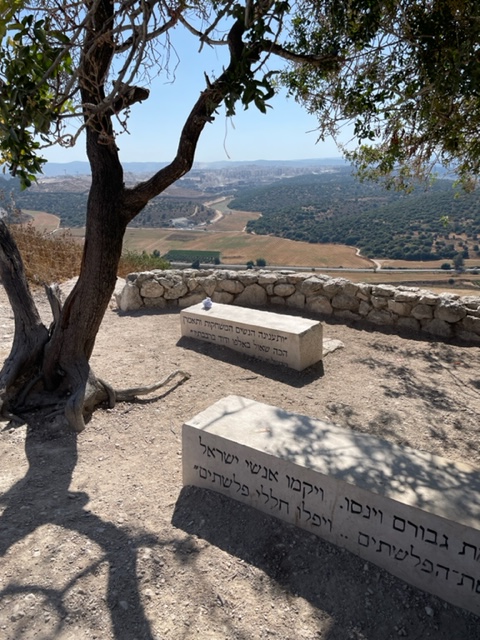


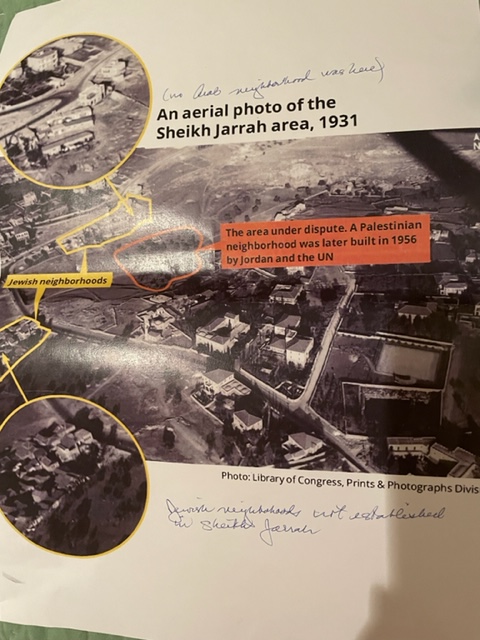
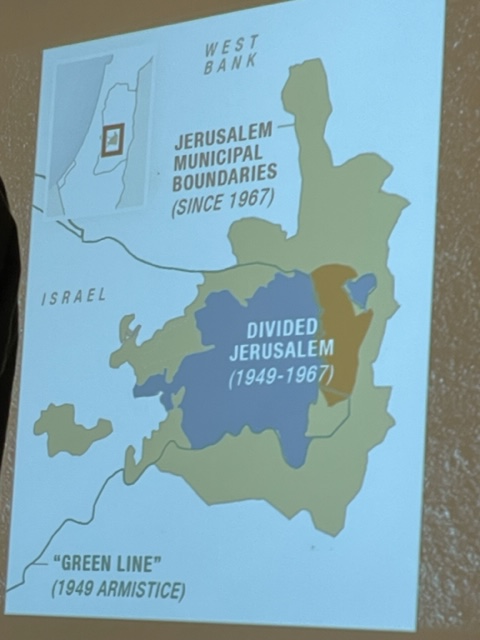
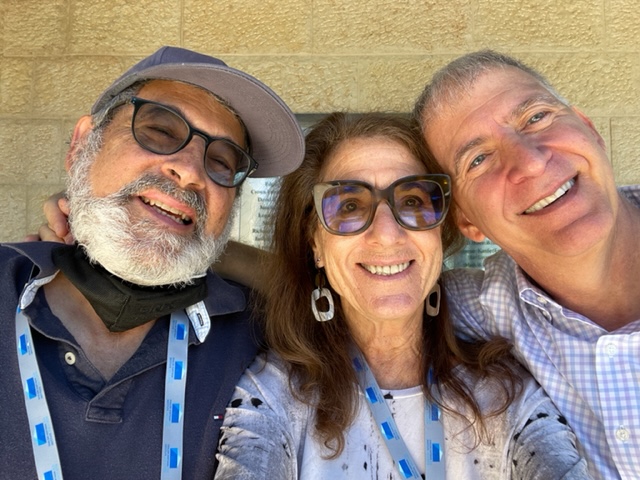
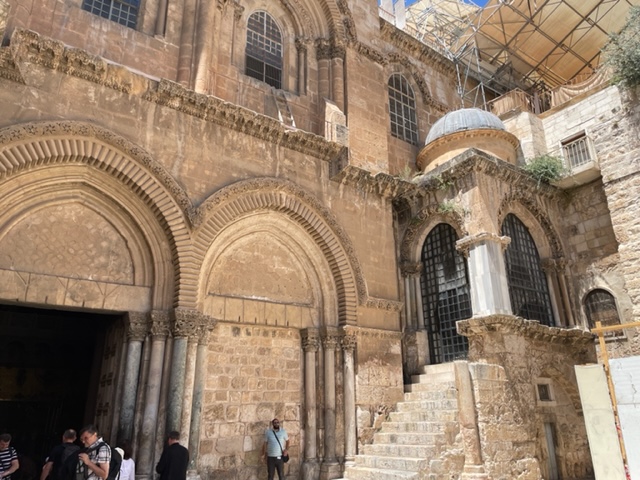

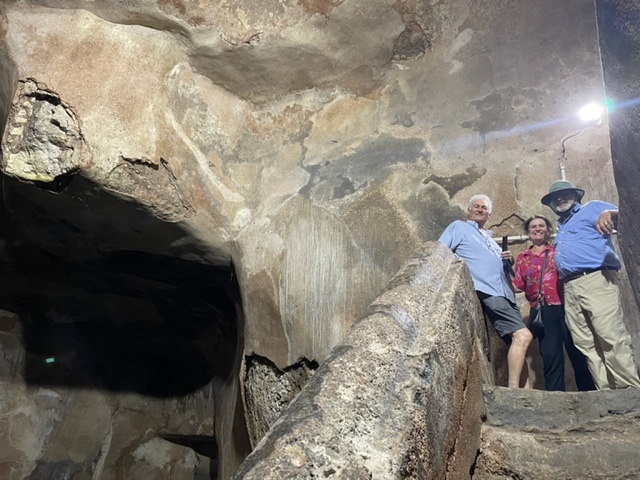
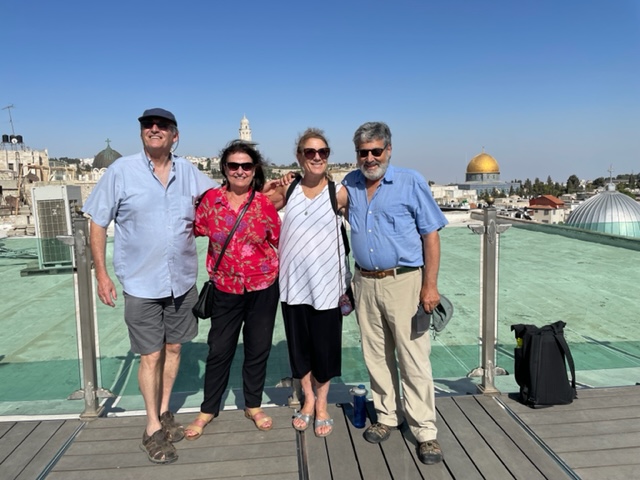


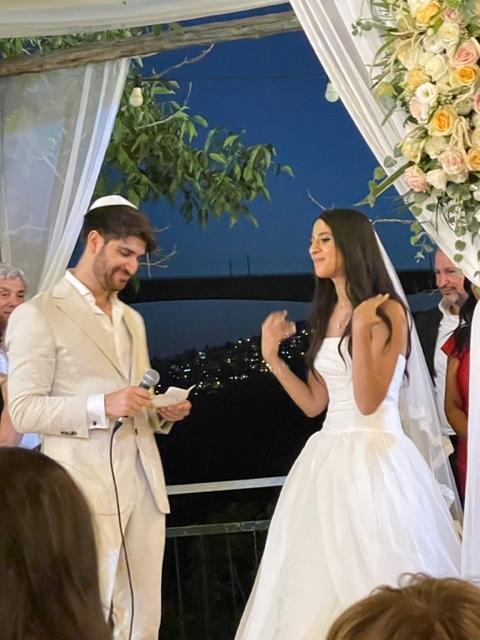
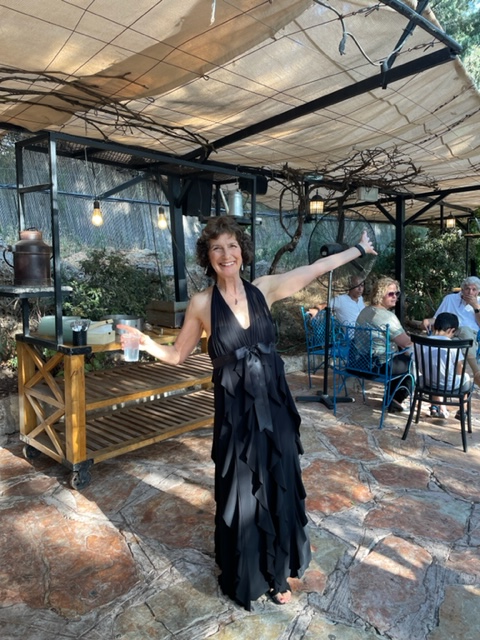


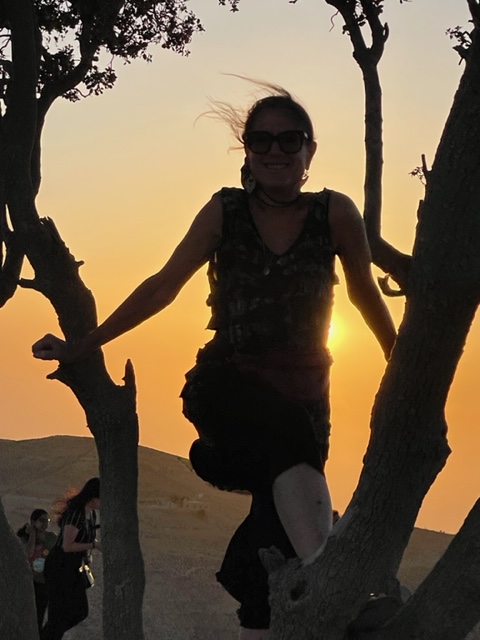
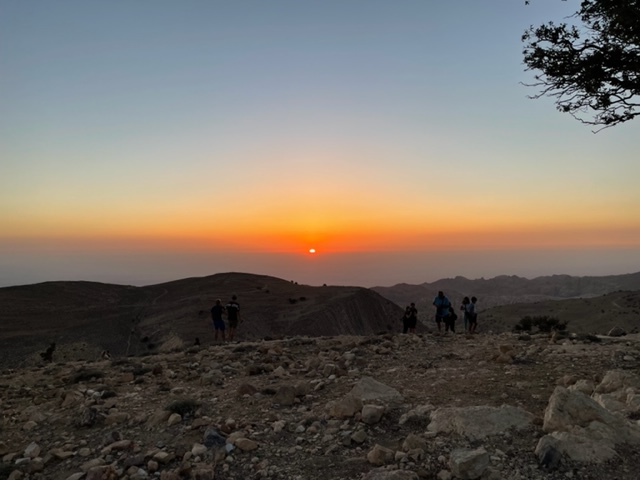


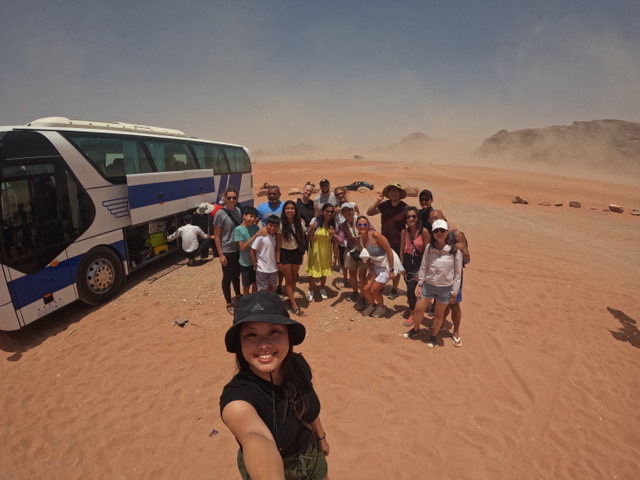


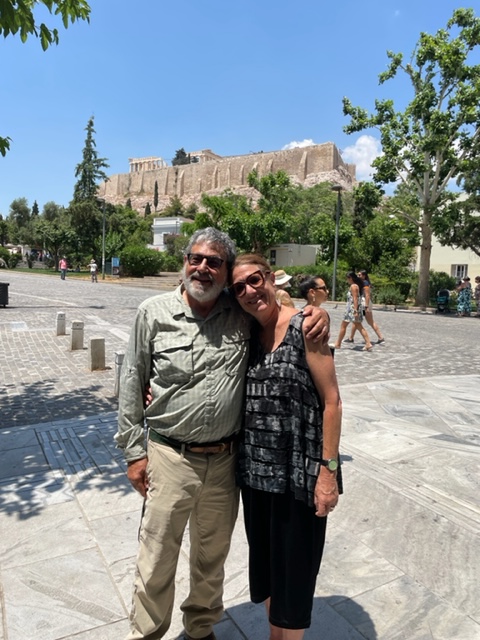
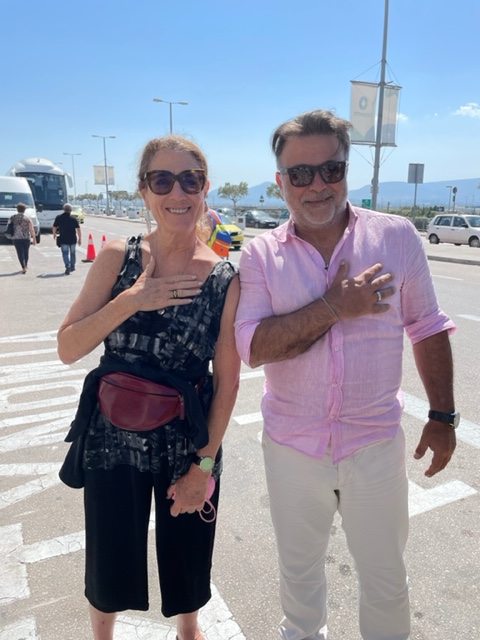
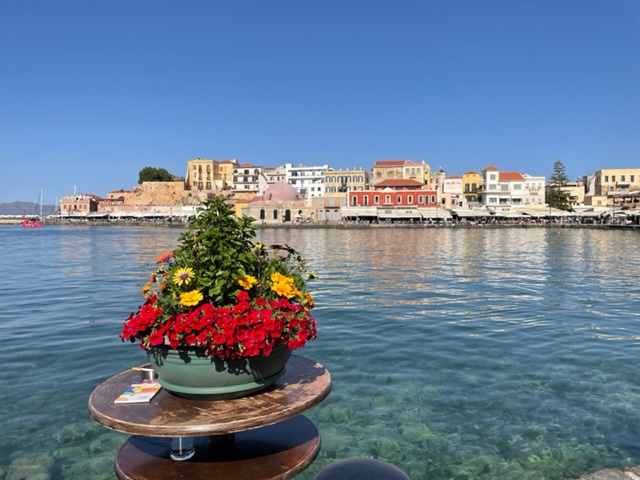
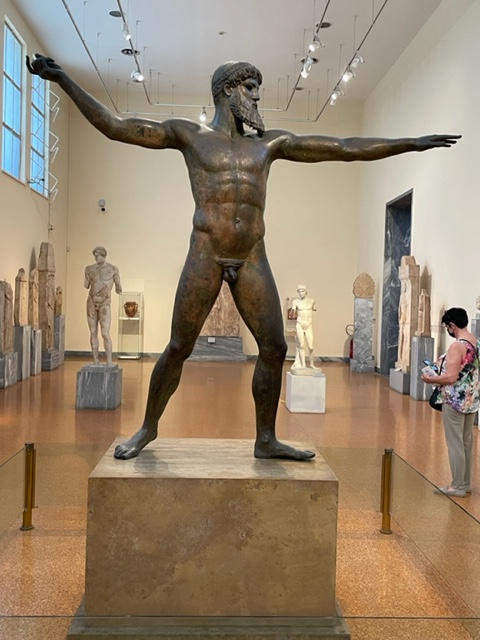


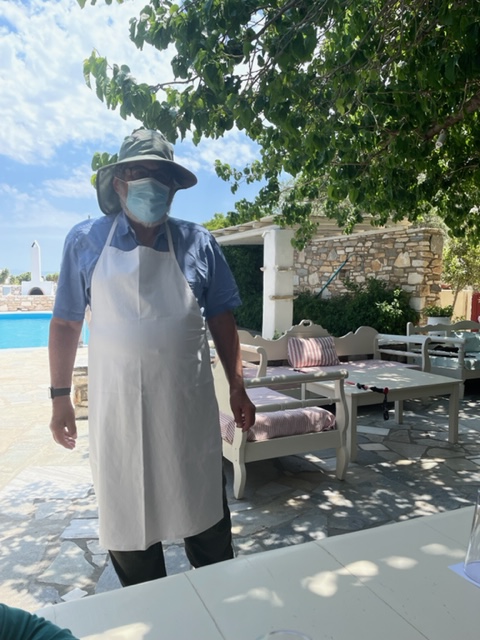


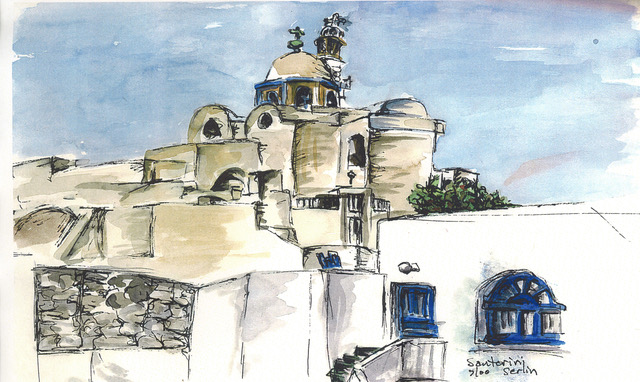
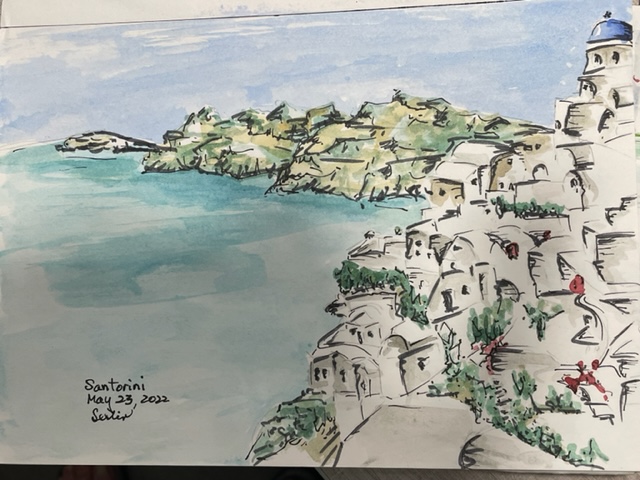
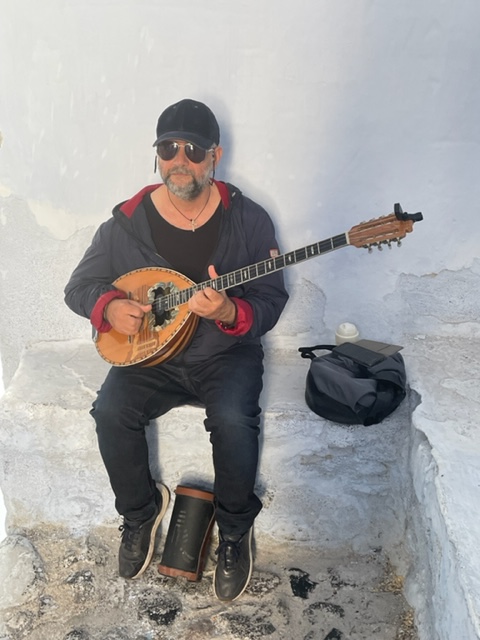

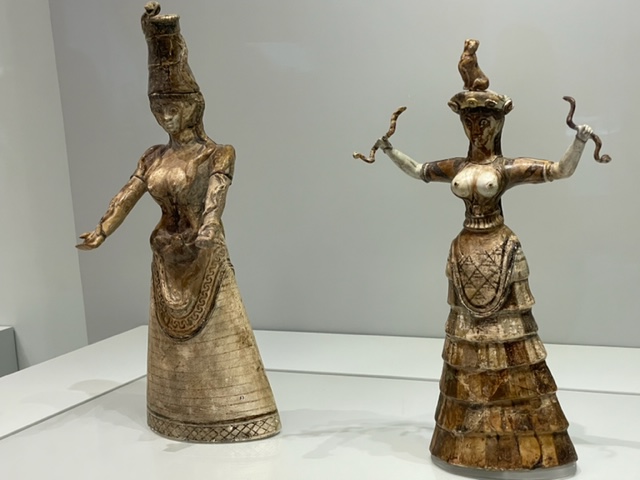
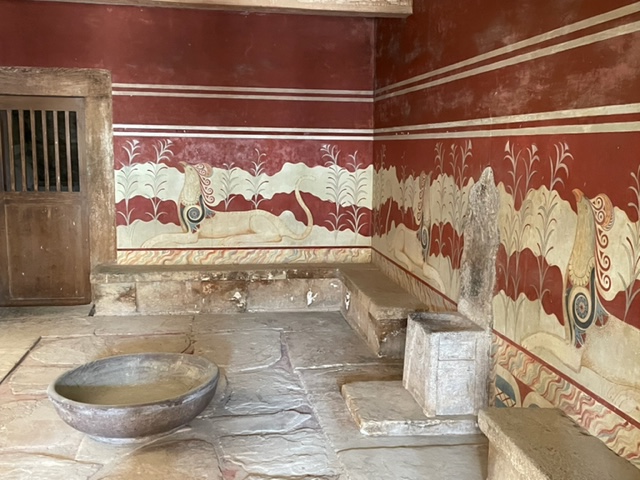
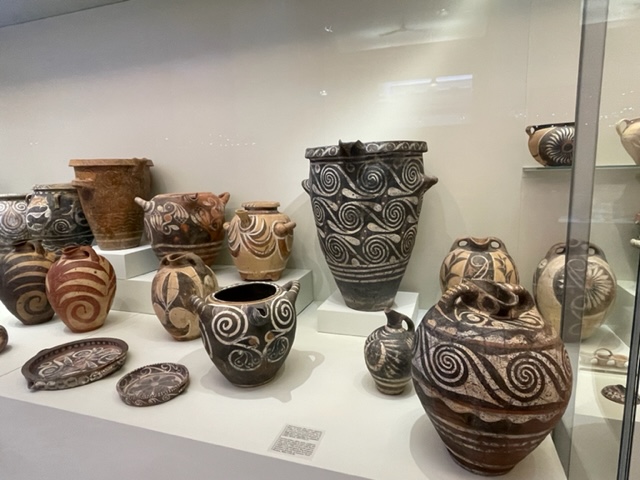
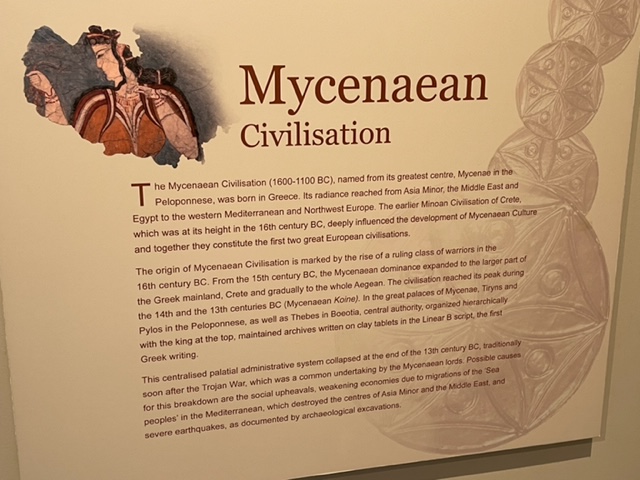
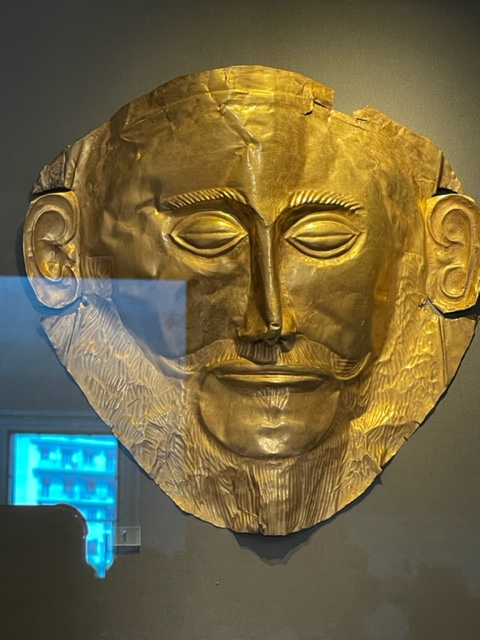

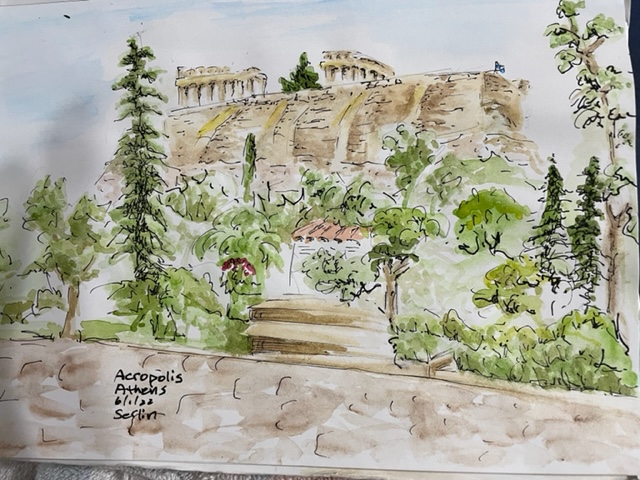


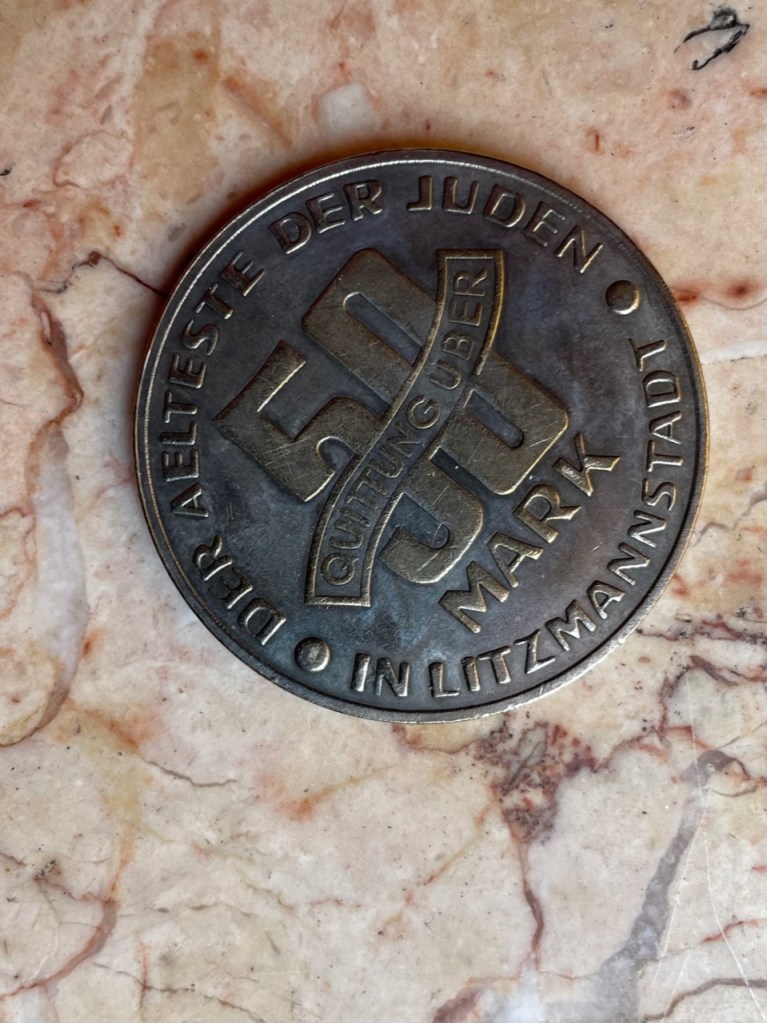
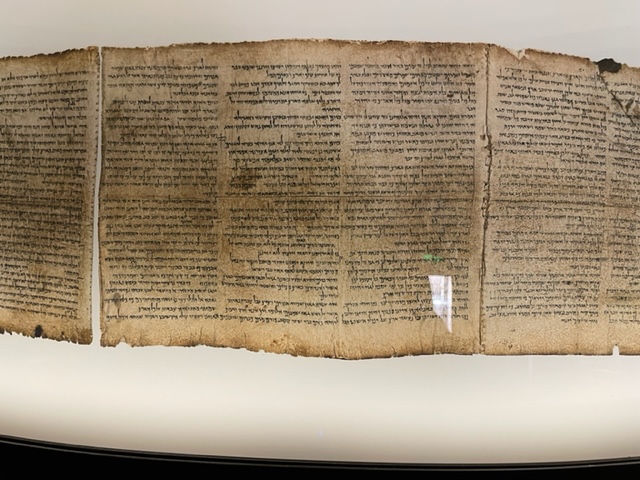
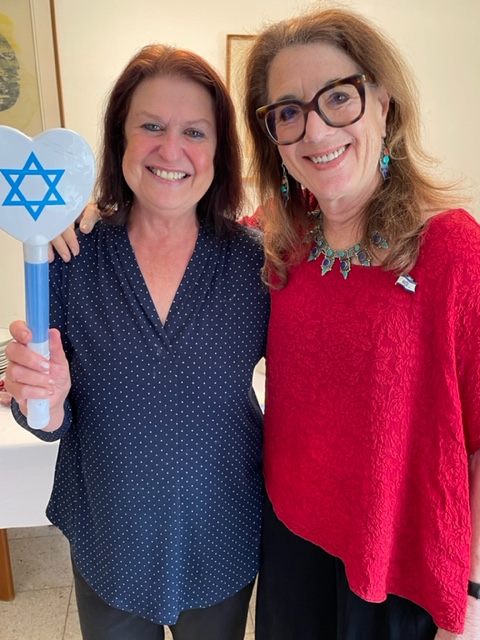
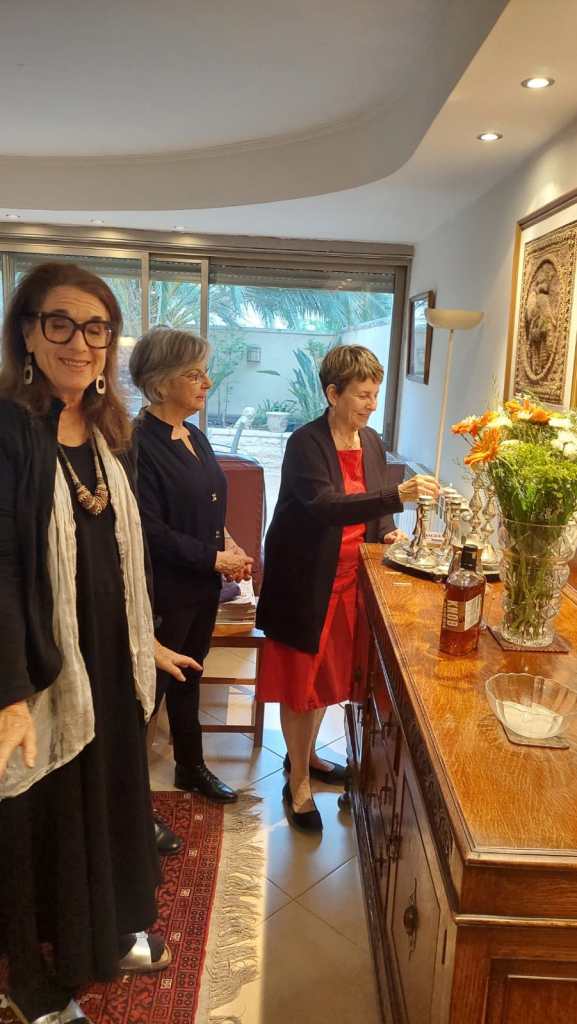
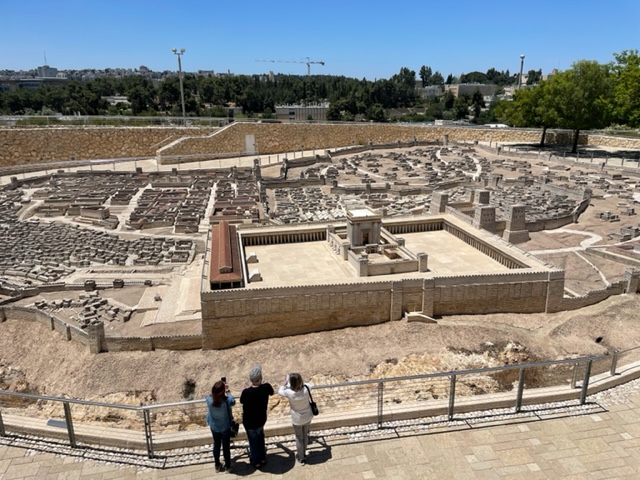
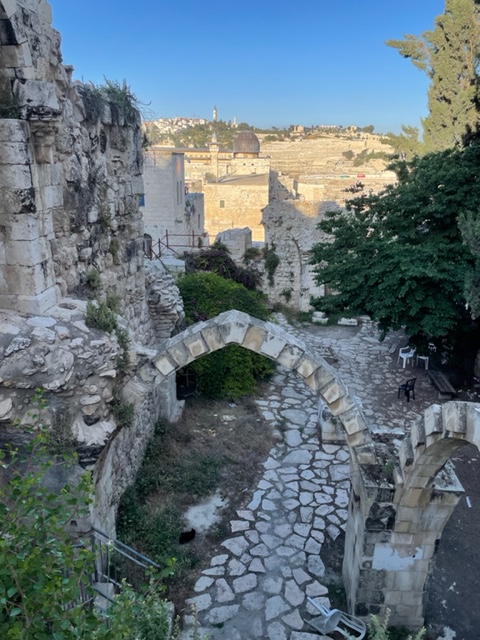
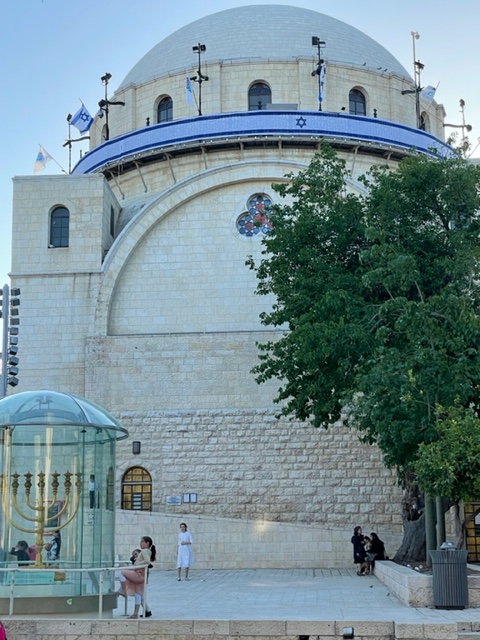
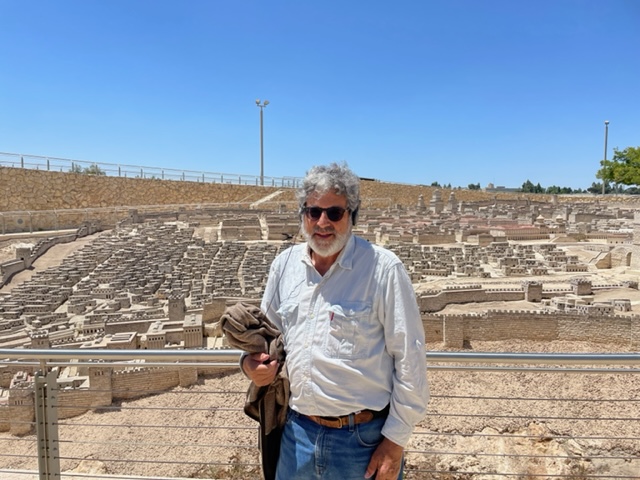

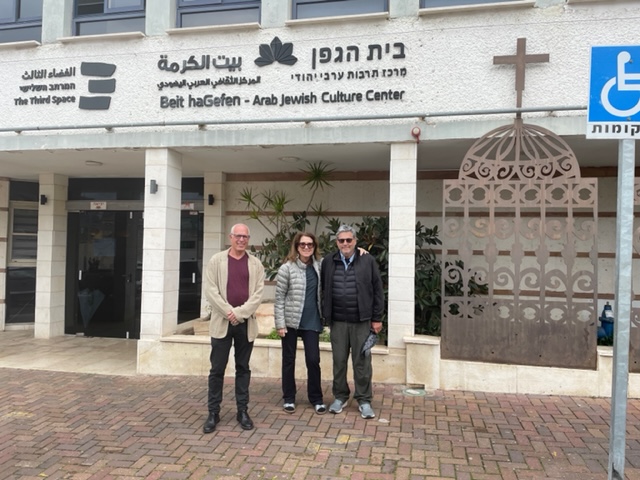

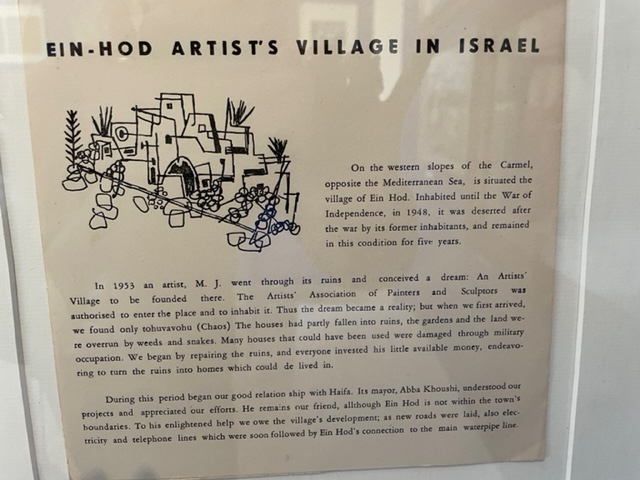


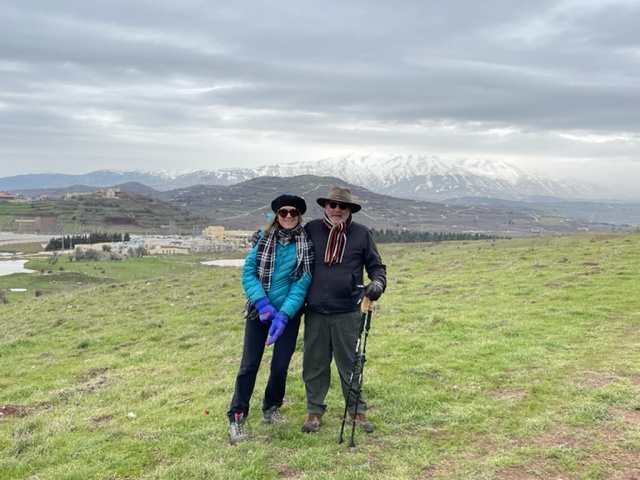
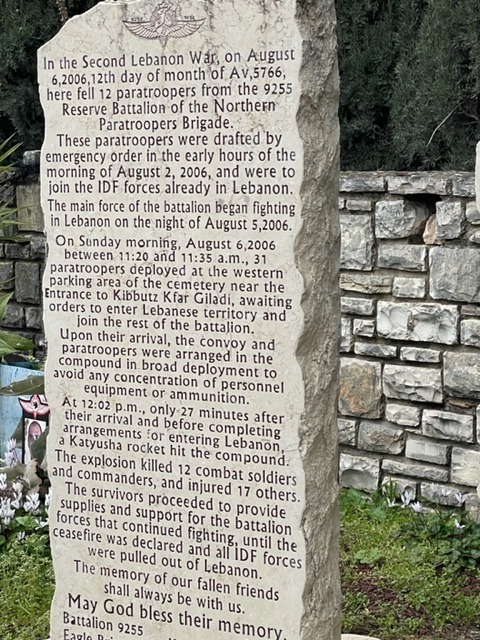
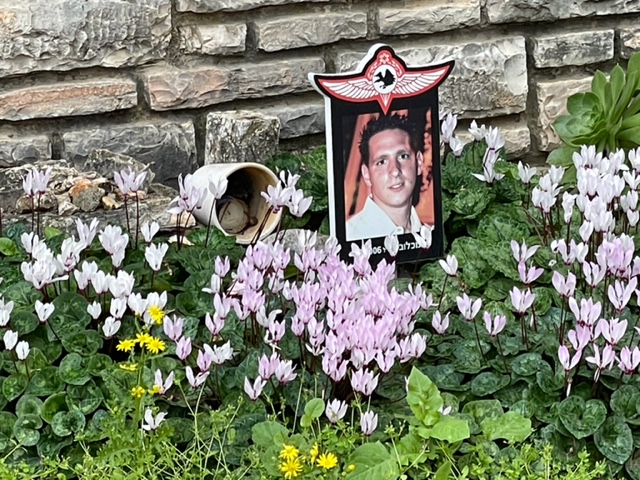
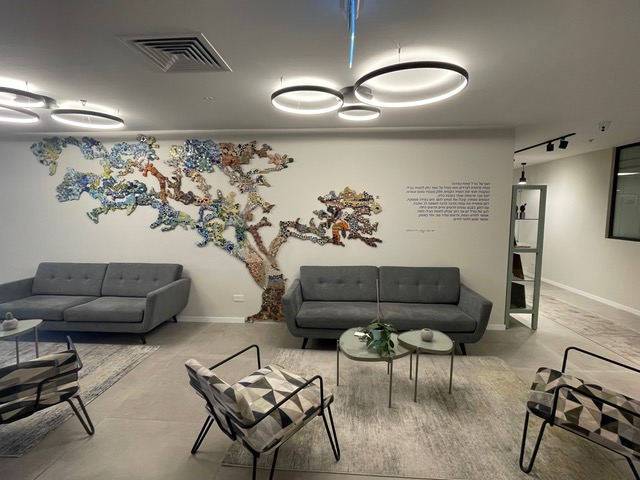
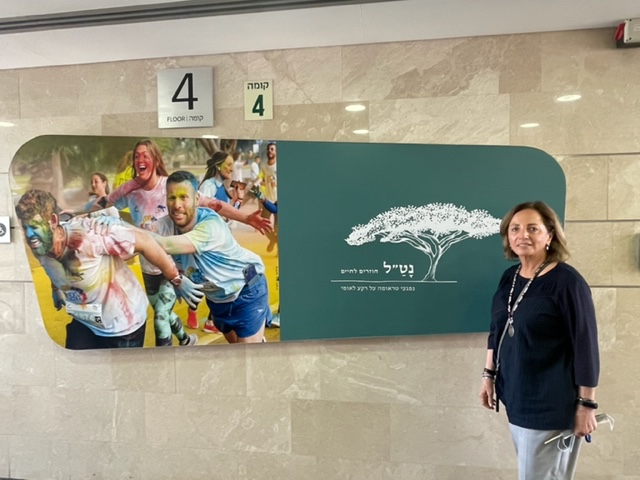

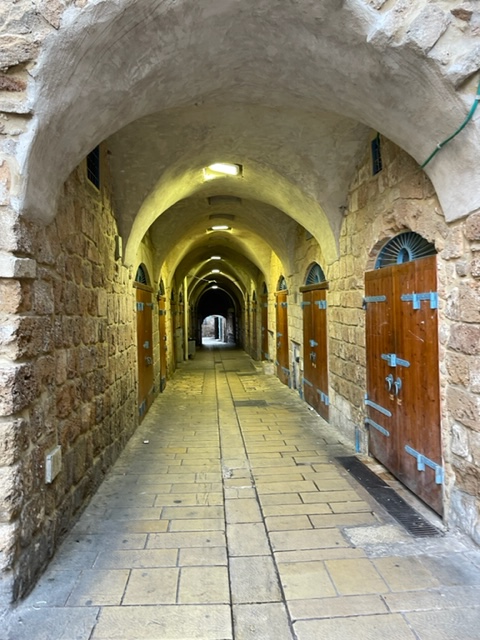
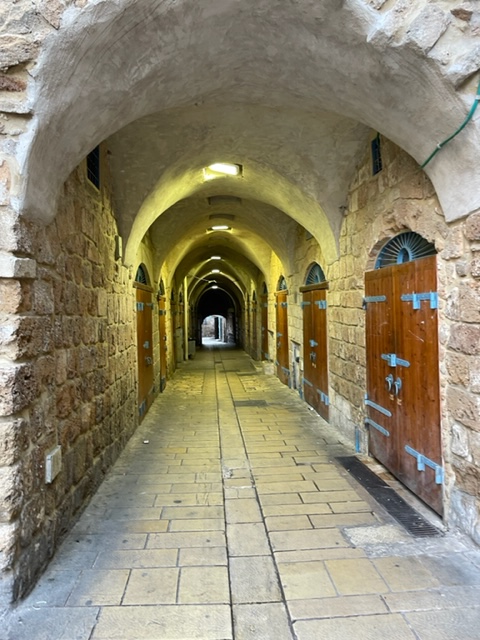
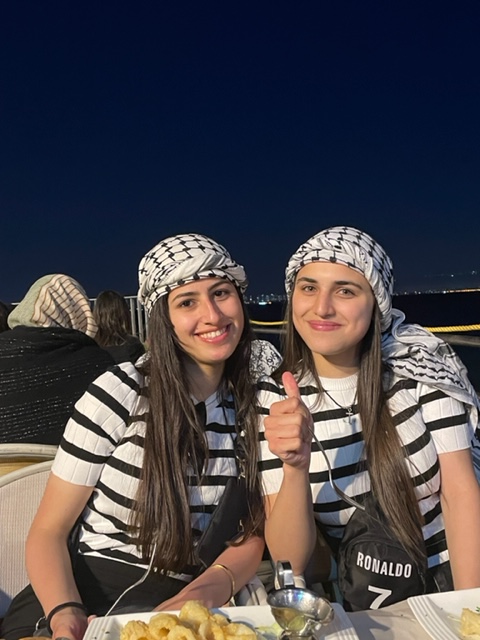
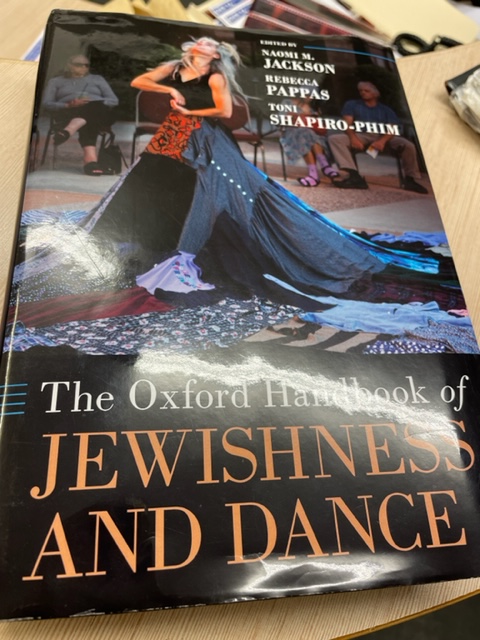

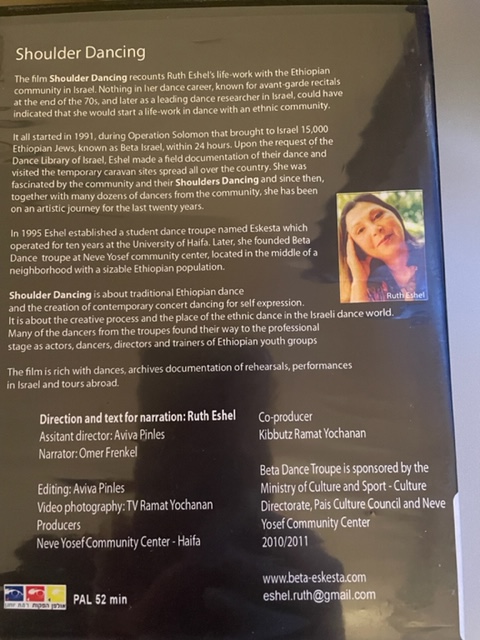

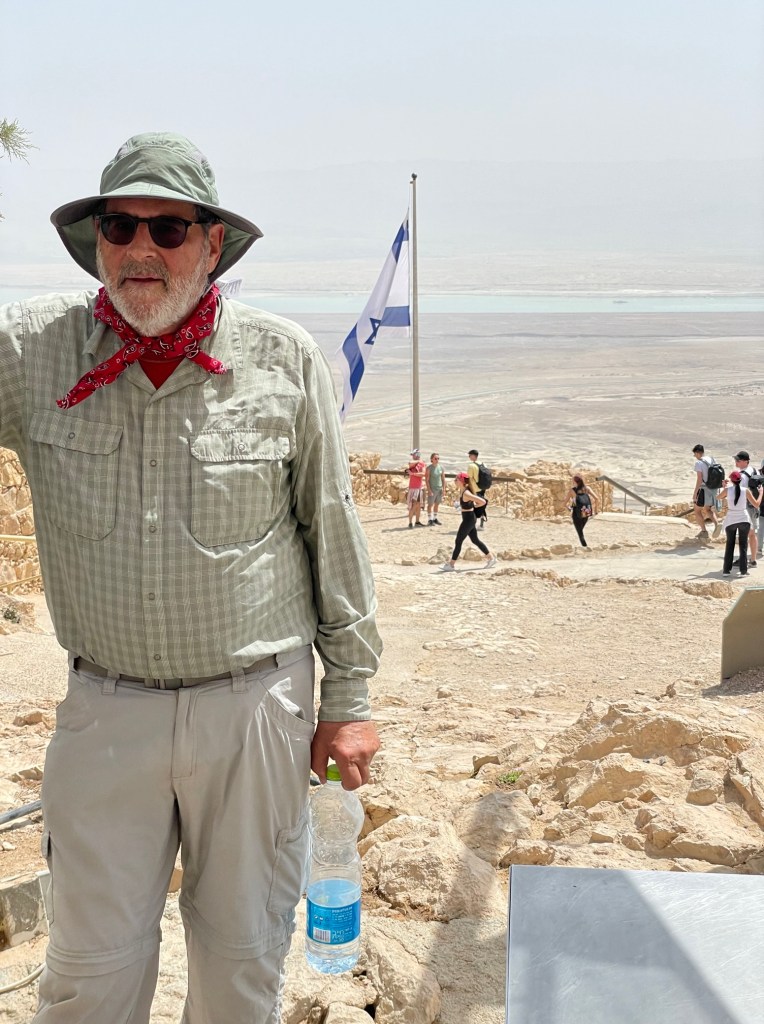
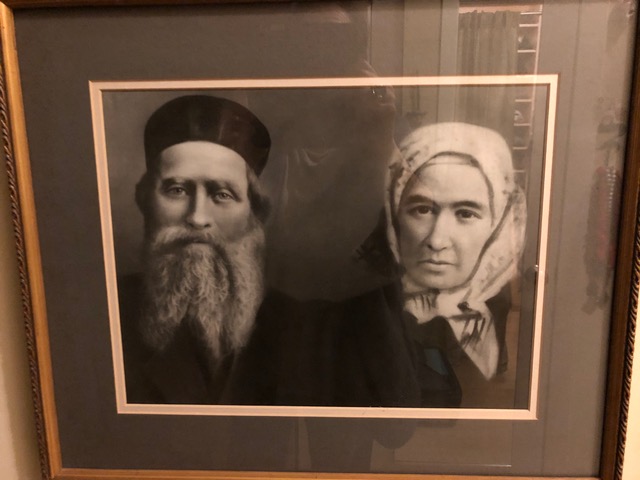
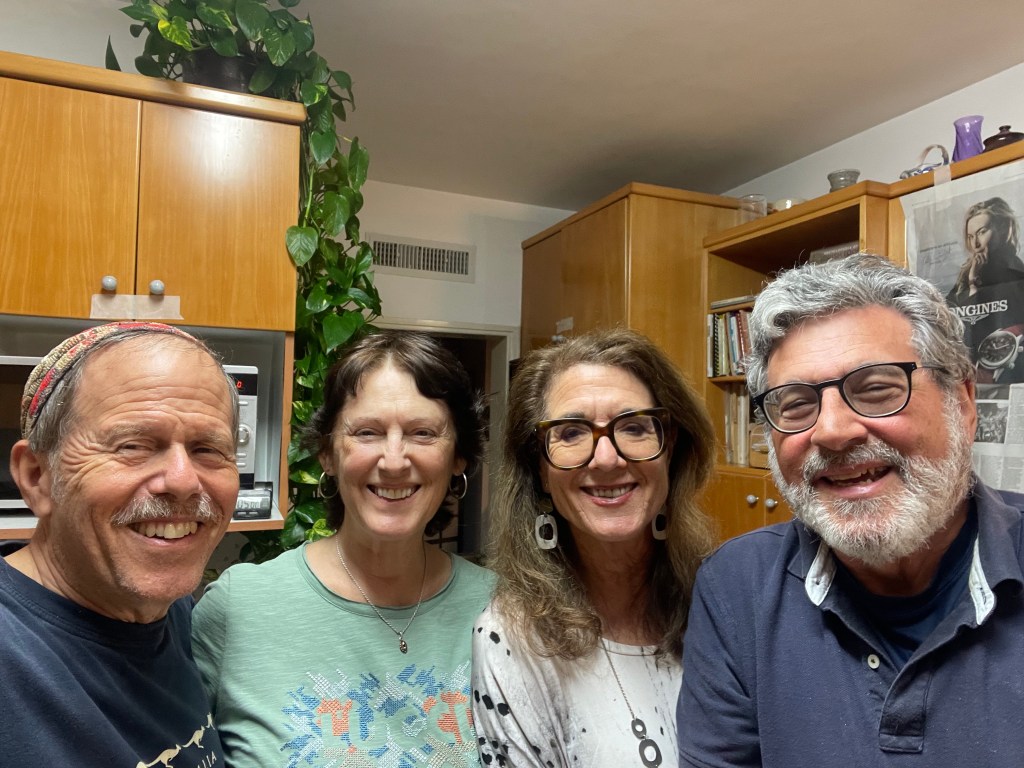
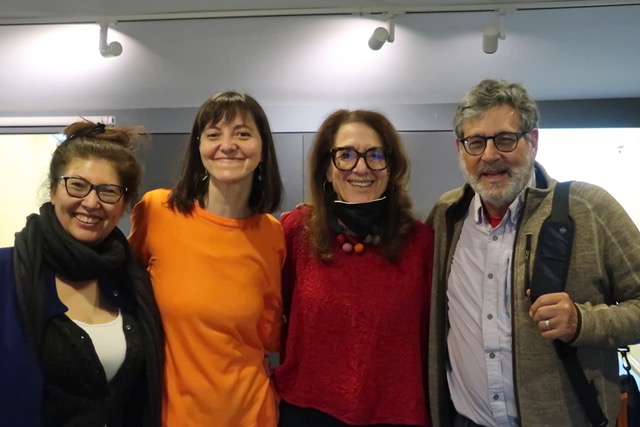
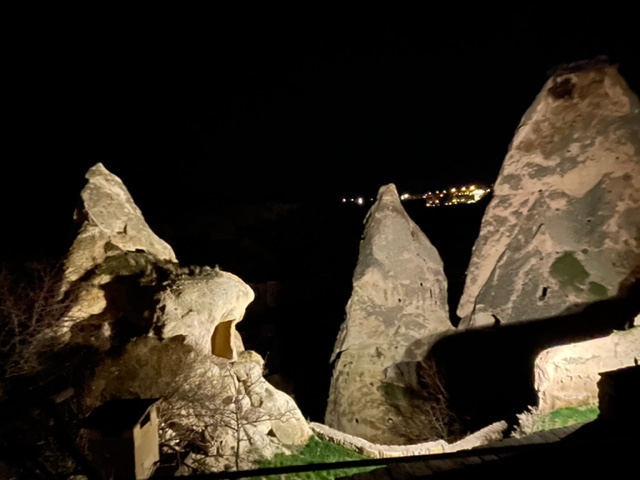
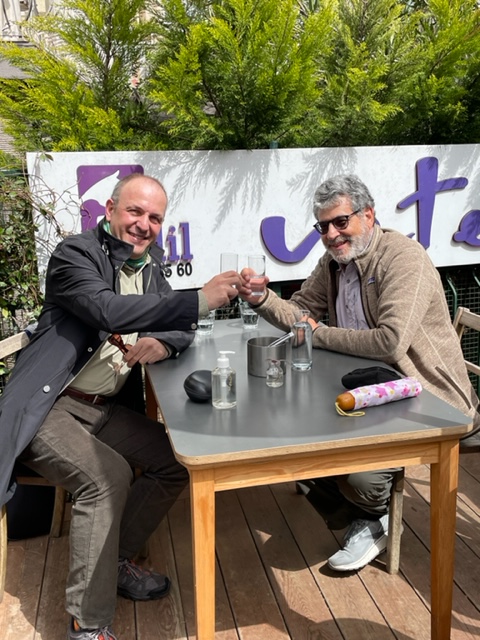
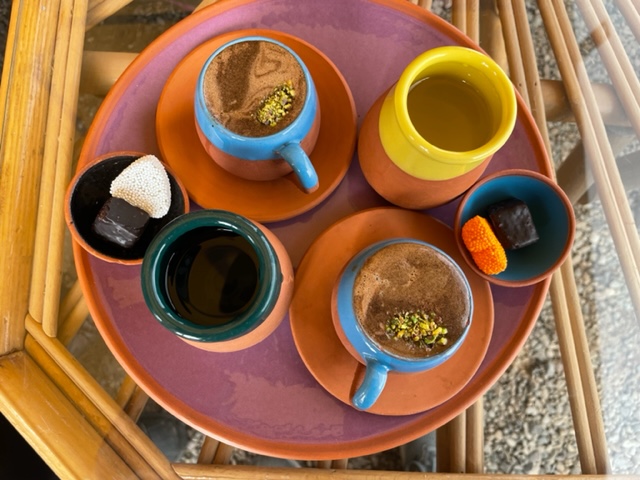

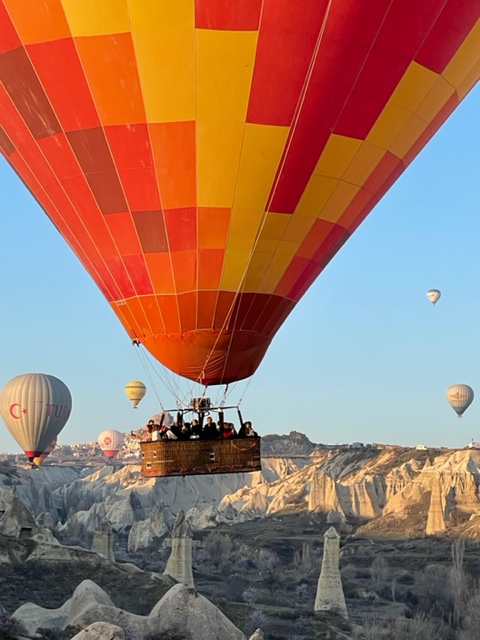


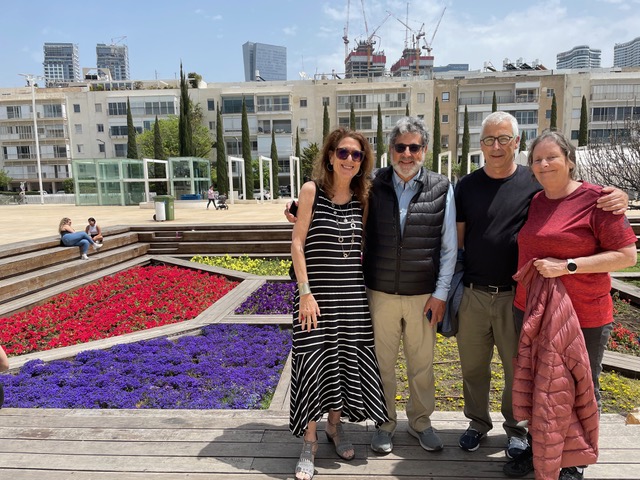

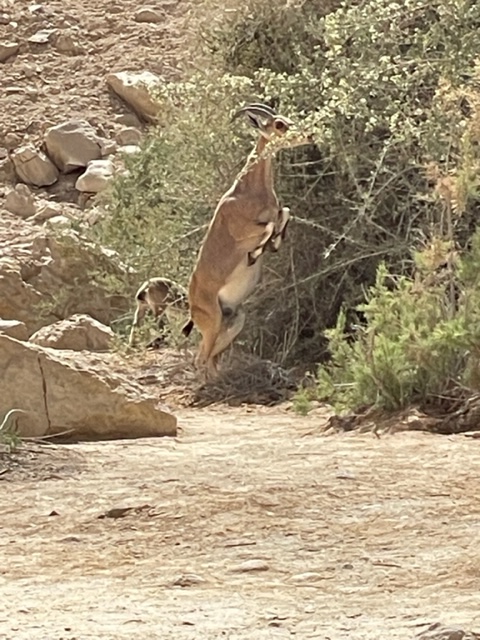
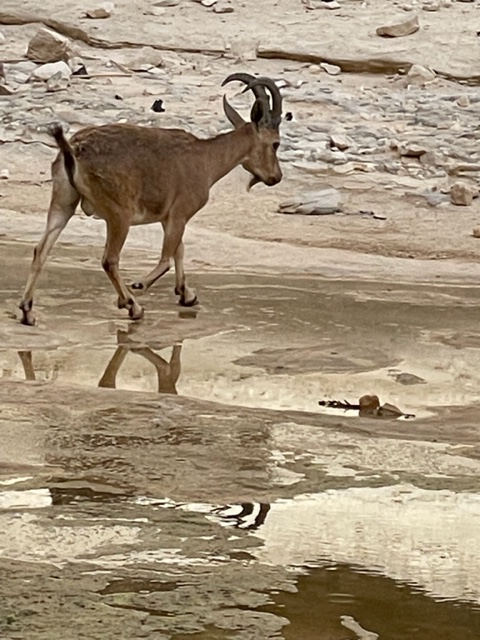
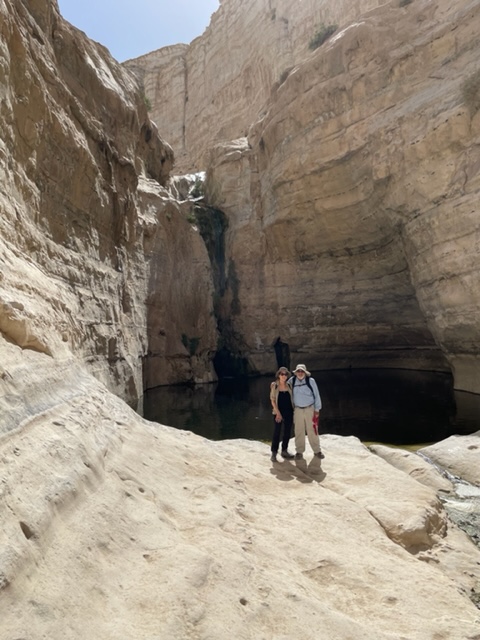

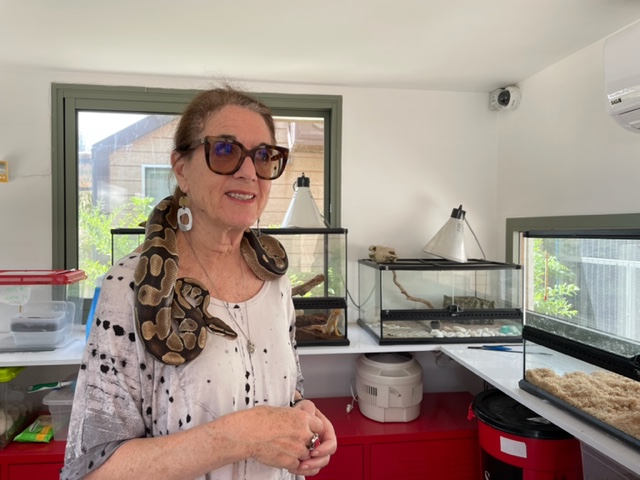


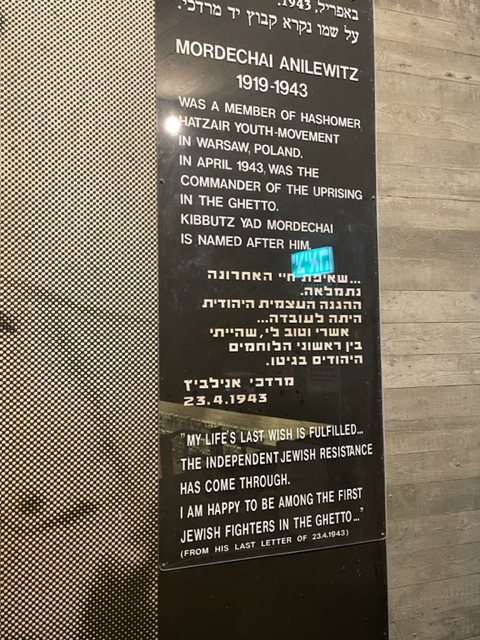
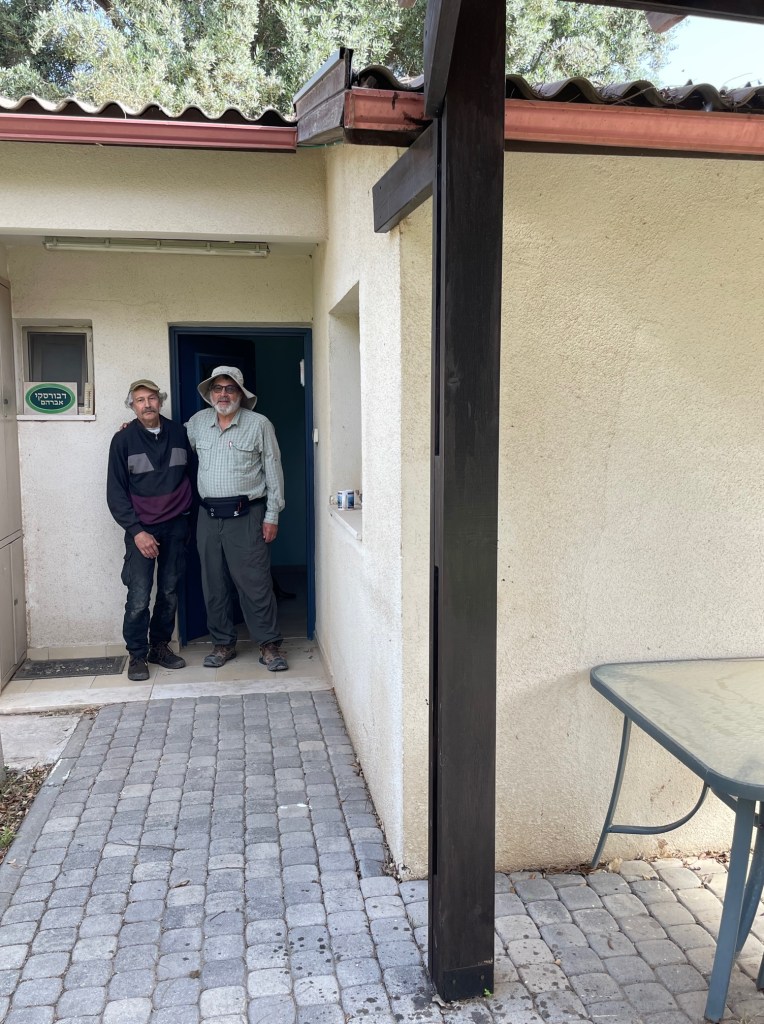


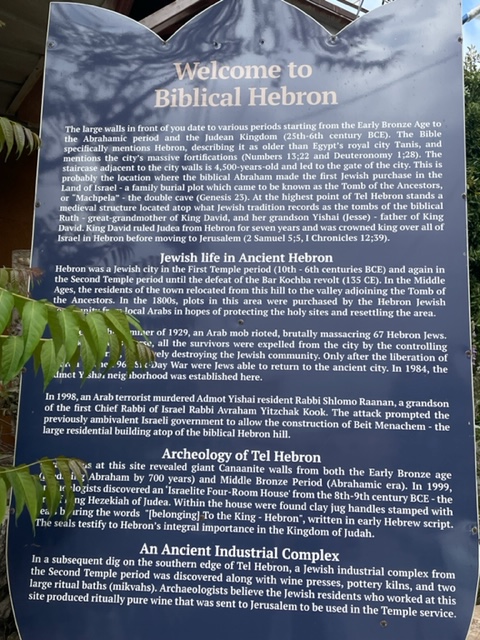
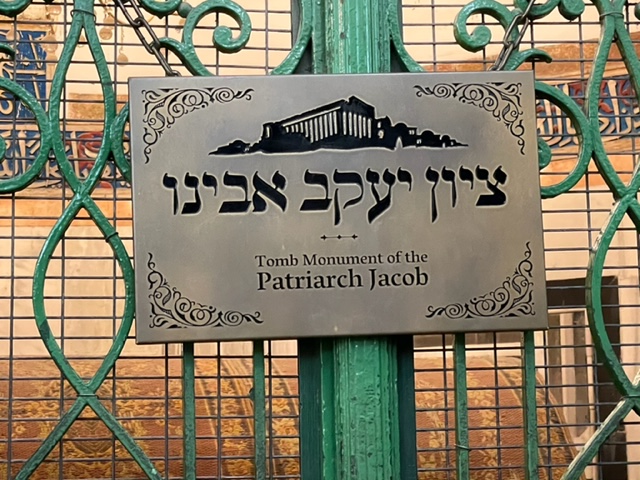
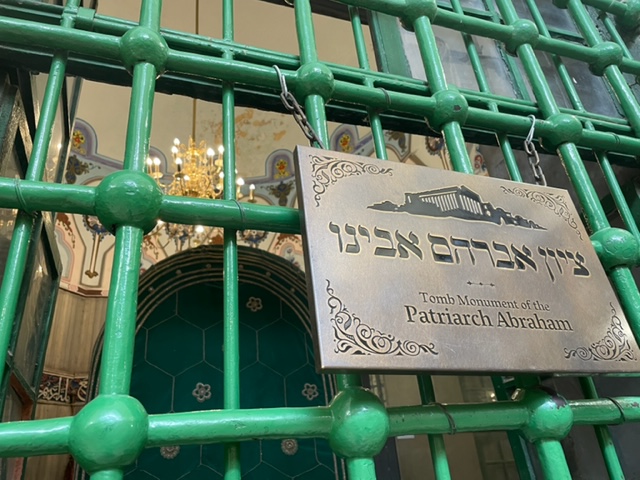
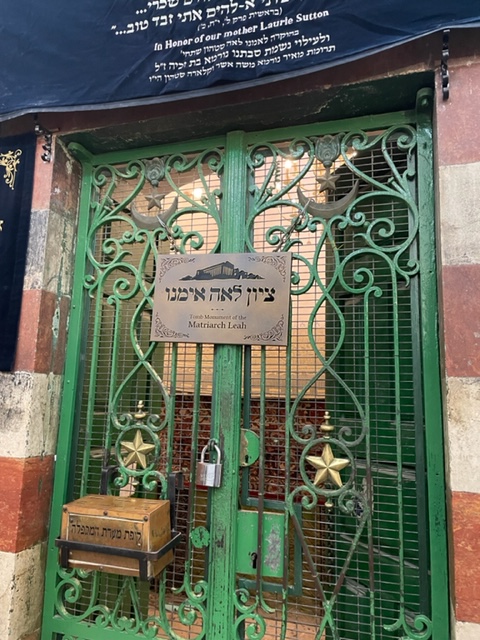
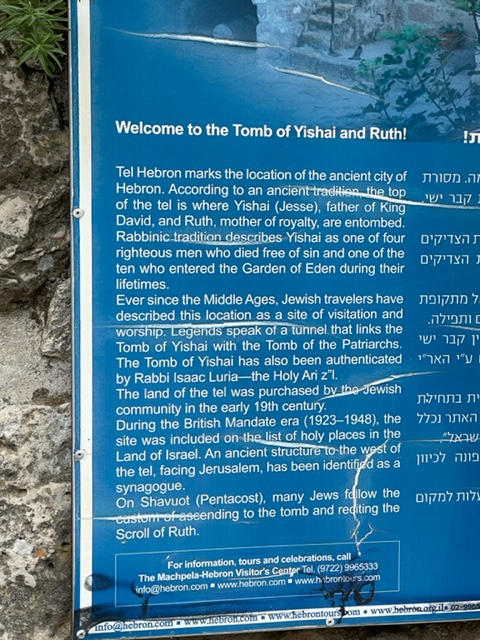


 IleneJeffIsrael2022